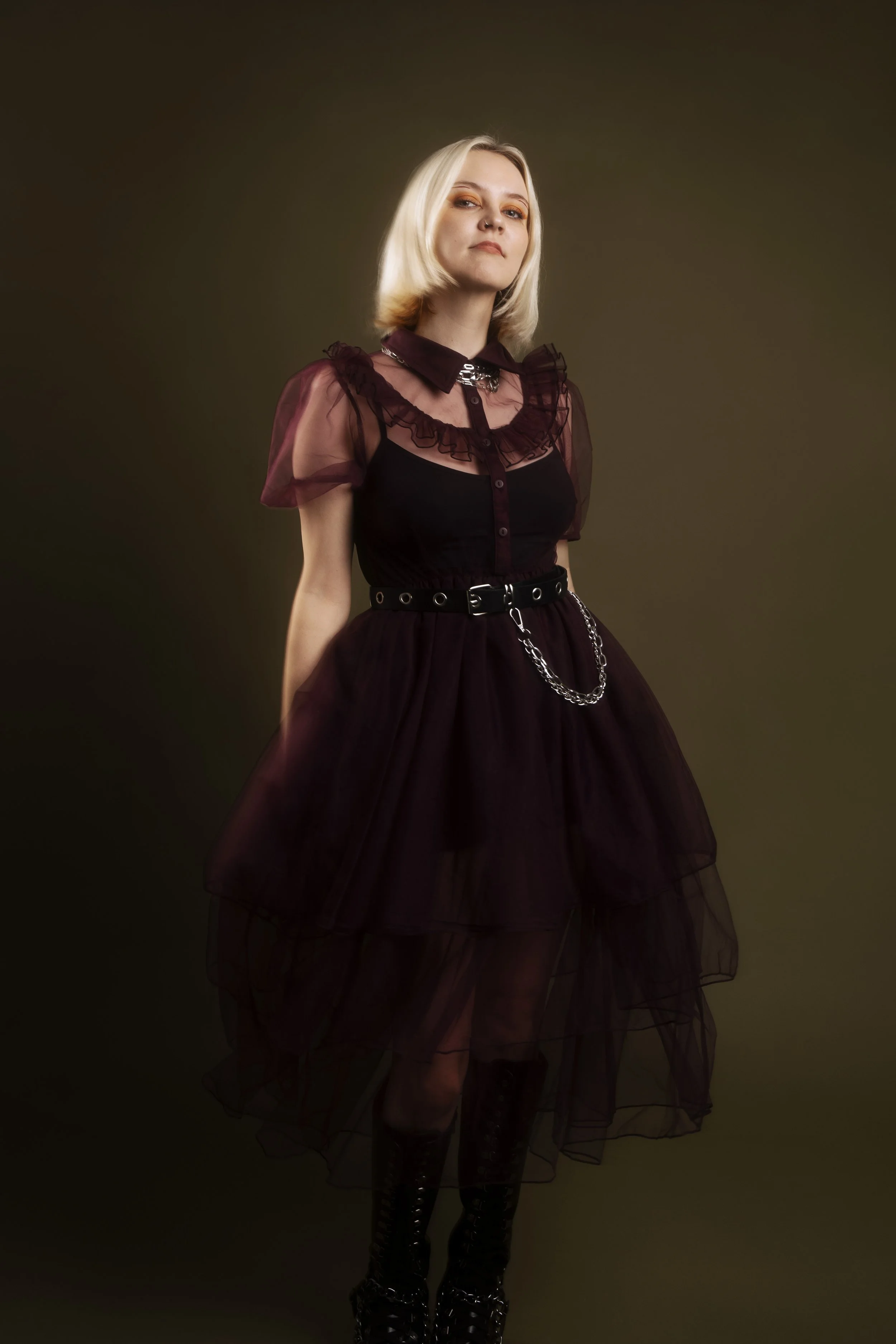
Sophie Smith is the powerhouse front-woman of Bristol’s alt-rock band Hamartia, but she doesn’t just stop there. She’s also the co-founder of Headstrong PR, where she pours just as much passion into lifting up other artists as she does into her own music, and if that wasn’t enough, she also hosts Changing Tune on Chaos Radio - a show dedicated to spotlighting women, trans, and non-binary musicians who deserve way more recognition than they often get. What’s so inspiring about Sophie is the way she uses every platform she has to make the music scene more open, more supportive, and more inclusive. She’s not just talking about change; she’s actively creating it, and there’s a lot we can learn from the sincerity, drive, and genuine care she brings to everything she does. In this conversation, we talk a lot about inclusivity within music, Sophie’s understanding of the different versions of ourselves that all need to be nurtured and embraced, and why Hayley Williams is such an important voice in the industry right now.
When and where did your interest in music start?
I was actually thinking about this this morning, because I feel I always say something different every time. I'm not from a musical family in any shape or form, so the initial interest kind of came from my parents loving Blondie, ACDC, any rocky stuff like that. Bit of Celine Dion, Shania Twain. All of that shebang. All Saints. Literally just listing off random bands now, but it just started off there, and then I started having guitar lessons when I was in primary school. That was my first instrument. It got to like Year Six age, and I was showing a bit more of an interest in the heavy stuff, and my cousin gave me his old iPod which basically had all the emo rock and metal bangers on there. It was just like the classics of each band basically, and I just became utterly obsessed. That is also when my love of Paramore started, because Misery Business was on there, and I've been away with it since. It's kind of gone from there. I ended up having vocal lessons at school and realised that’s what I really enjoyed. I started writing guitar and vocals, so I was a singer songwriter for a long time. I then realised, for emotional support, I actually need a band behind me.
Who or what inspired you to take it a step further, and become part of the industry yourself?
Okay, this is interesting, because I didn't really think that I would actually be able to get into the industry. Being from Cornwall, being in a rural place. It's not been that easy to find the industry. So I thought, you know, I really like music, and I like singing... What am I going to do? So my next step was that I went to music. I went to college and did a music course, and it was really funny at the time because my parents were like, “are you sure there's a career in this?” I just said that I was sure it was going to be fine, but obviously I had no fucking idea. After that, I was a bit stuck. I didn’t really know what to do now once I’d done that. You know, I was in a band. I was enjoying it. The next step yet again ended up just being music university, but again this is also weird because I'm from a family where I am the first person in the history of my family to go to university. I’m from a working class area, so the fact that I went to university is amazing and insane, but then the fact that I did music is another level, because that's just so not what they wanted. It paid off obviously, and I think because I was so hungry for doing music and I needed it to succeed, there was kind of, I guess, the pressure of being the first to do this. I think I’ve just basically taken on this mentality where if there is any option for me to do anything, I'm involved now. You need this person to do this thing? I'll do it. Like, I have no idea. I'll just learn on the fly. This then meant that it's pretty hard to explain what I do because I do about seven different things in the music industry haha. I went to uni in Bristol which is where I basically met my entire network, and was lucky enough to then go into a full time job where I'm really involved in music, as well as all my side hustles being so too. I feel like I'm in an absolutely insane position that, you know, little old me never would have thought I was going to do. I actually still can't believe that I'm doing music to be honest.
So you really immersed yourself into the music industry in varying ways, which we will get onto discussing, but initially, when did you know you wanted to be in a band and when did Hamartia happen for you?
Basically as soon as I discovered Paramore, I probably wanted to be in a band. I just loved Hayley Williams. I loved the music. I was depressed and just thought, let's do this. Like I said, I did solo stuff for quite a while and then I then kind of realised that I didn't love it as much, as I've always wanted to be in a band, and it happened during second year of college, back home, where I met the bassist of our band, James. We had like a version of Hamartia that is not Hamartia, essentially. We had a different name and he asked me to be in his band, and then it just kind of happened from there. I've just been utterly obsessed with it since. But the Hamartia, as it is now, the “final evolution of Hamartia” as I like to think of it, was really about 2019. It was when we were at uni where we all properly met, and that's when I would say we treated it seriously and all started writing together. Before, it was like a bit of fun. It's been a kind of wild, wild ride really, but I love it. It's fun.
So on that, your role in Hamartia is vocalist. Do you have quite a big part in the songwriting of the band songs?
Yeah, we don't actually have like a set formula. Some bands will do it the same way every time, but every time we do something it’s so different. So the two songs that we've already released and another one that we've recorded and ready to release, I've been really, really involved in more than just the vocals and melody. Some of the ideas I've been like, “guys, I had this idea on a walk and it goes like this…” and then give it to them and ask if they can make it into a song. I don't know if it's gonna be good. But it somehow worked, which is really weird because I don't really play guitar anymore, so it's very much from a vocalist perspective and it was oversimplified. So, yeah, I’ve been really, really involved with all of that. But then some of the newer stuff, I've been less involved in the actual instrumental writing, but more involved in the arrangements, I guess. So instead of being like, “OK, I've come up with the initial idea” it's been James that has taken a really active role in songwriting, and we've worked together really closely. I've been kind of allowing more people into my space with my lyric writing and melody writing, which is kind of the first time that I've really done that, and I think it always gave me like the fear because I'd be scared that everything would change and it wouldn't feel like me. But I think actually it's made my songwriting stronger because I'm allowing people into it, and I know exactly what is and isn't me. I don't feel scared of saying if something’s not right or if I like something better than what I did. So it's kind of the first time now that everything is really, really collaborative. Everyone is getting involved in different parts rather than me just being completely separate and being like, don't touch my lyrics, don't touch my melody, this is mine.
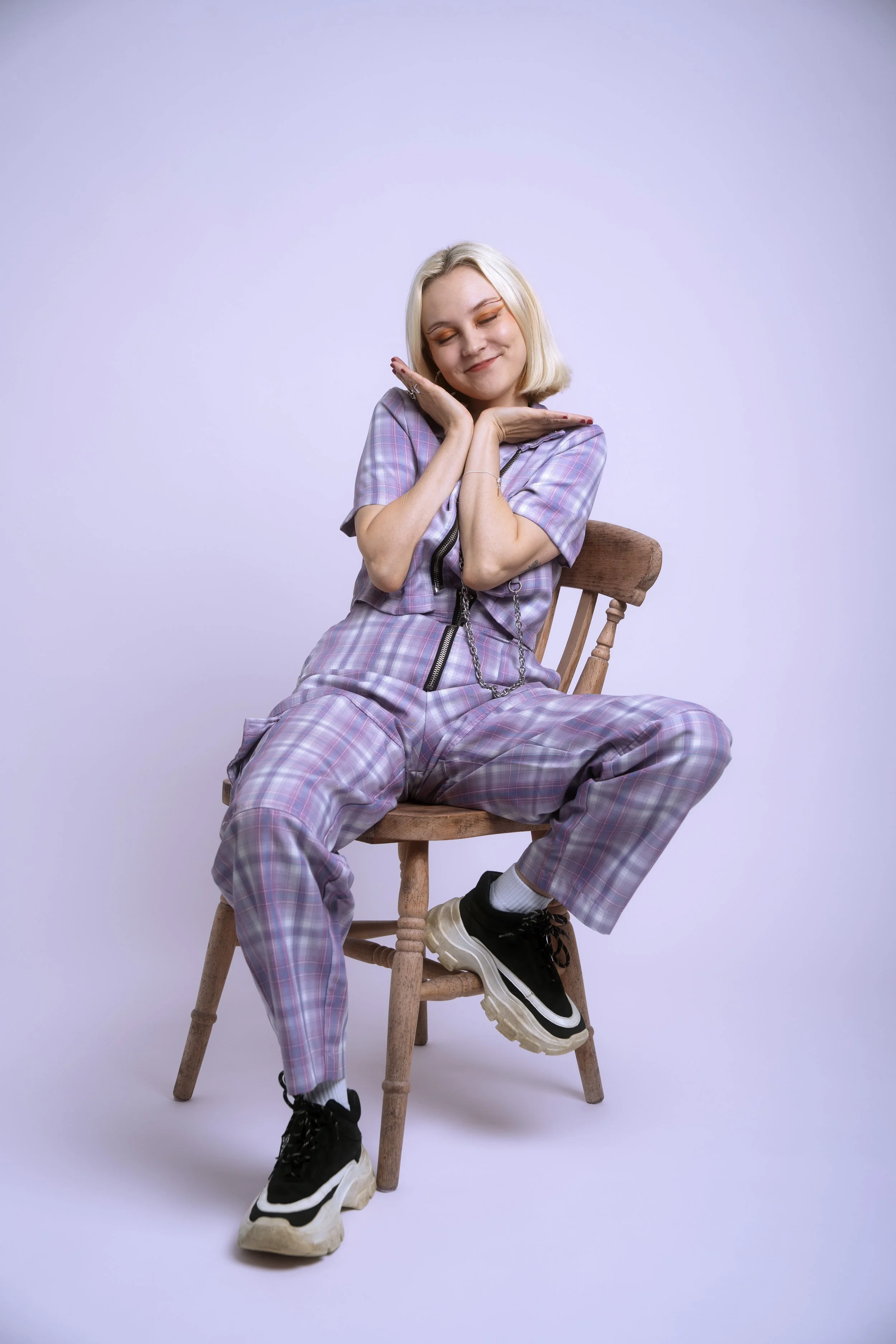
Sophie Smith (Hamartia/Headstrong PR), 2025 © Alia Thomas, www.aliathomas.com - please do not use without permission.
I know you've said it the songwriting is now more collaborative, but where do those starting points for the lyrics come from? For you personally, are they coming from your personal experiences for example, or the overarching female experience?
Yeah, I definitely think so, I mean it’s a whole part of your identity that I think even if you're not consciously writing about it, it's subconsciously coming in. So I think a lot of my old songs, compared to now, have always been about my life experiences, but I think now I've had therapy, I actually graduated, I'm mentally stable, guys, haha. I had therapy for like two and a half years, and it was a really weird experience. I felt it was a good time to delve into stuff, and I learned so much about myself that I'm just like a completely different human now. So that comes up a lot in the songwriting, a sort of new found empathy for myself, which is so weird because it feels really self-absorbed to be. But I realized I compartmentalize so many parts of my life. So I am Sophie Smith, but then there’s the version of me that is in Hamartia, and then there's a version of me that's ‘Snip’, which is a nickname, and that’s kind of how I rationalize it, so that all does come into it. I like that there's so much of the experiences of being a woman in music, and there's more things coming which are kind of more specific to being a woman and being a woman in music, but I just find, I guess, there's an imposter syndrome because so many people write songs about this, and it's so important and strong, but I still don't know exactly how I want to talk about it, in which way. There's like a kind of weird imposter syndrome in that, there’s a lot to unpack.
But everyone's experience is unique, isn't it? You will have something different to say than someone else… As Hamartia, you've supported some great bands on the alt music scene including As Everything Unfolds, Mallavora, Lake Malice, Dreamstate and Vukovi to name a few. The common link between these bands in particular is that they are all fellow female fronted bands. What was it like playing on the lineups with these other bands?
It was genuinely so nice, because I think when you're in a lineup with other women, there's an immediate initial understanding and respect there. One of the things I’ve noticed going into a room, very often being the only woman in a room, is sometimes people are so aware of you being the only woman that people at times just won't speak to you. So it's been great playing these lineups where I've had the other women come up and be like, “hi, I'm this person and nice to meet you.” You know, there's immediately a contact there, whereas that doesn't always happen. But when you're part of these lineups, it's great because you just instantly feel so much safer. I wish there were more lineups like that, and I'm not saying it has to be all female lineups because that also is sometimes an issue as well. We've played a few lineups where there's certain people that I've noticed that will only ever book us when there's another band with a woman in the lineup, which is then yet again a bit of a weird issue, because why wouldn't they book us for the other lineups? Are we gimmicky to you? I don't know. But having lineups where there are other women on them as well is instantly a nicer vibe, and I think when you are a woman in a rock band, and then you go and like see who else is out there, very often you are probably in touch with these people already even if you haven't played with them, because you're so hyper aware of it and try and stick together. There's this amazing sense of community and support, and I truly think there is no better hype gal than a gal in the music scene because we just ultimately want everyone to succeed. So it's great!
On that topic, you've said that it feels like a community within women in the music industry. Have you had any experiences where it's not been like that with other women?
I think it definitely does happen, and I think it does leave a bit of a sour taste in your mouth. I try not to be upset or angry at the person because I don't think that it's necessarily their fault, because it's something that we've been conditioned to do, like if you look at any form of media or magazines, they've always loved to pit women against each other. So I think there is some part of it that is such a learned trait that you have to fight against that, and I think all of us are kind of recovering from those areas of magazines and media. So when you start off, there is always a competition element. I think it's also because of the fact everyone supports this, so promoters will be like, “OK, well, you know, we are supporting this band with one woman” but then no other bands will ever get booked with this woman. So there's so many elements at play, but ultimately, I try and treat everyone how I want to be treated. I go in as myself, and if there's an issue, you just have to accept it. Thankfully, it hasn't really happened to me in a long time. I think people are unlearning so much of that, and I think we've kind of realized, you know, there is more to this. We need to not believe it, but yeah it's just trying to kind of break down these barriers. It's the fear of change and the fear of competition, really. Thankfully, it doesn't happen anywhere near as much as I felt like it happened more at the beginning of when I first started the band. Now, it may also just be the energy I give out. I've got no idea, but I think it's definitely phased out a lot more, which is good. Other people in the industry who are responsible for making decisions need to stop putting women against each other because they are responsible ultimately.
That's very true. You've touched upon the fact that you are a big Paramore fan already, and they’re one of, if not your favourite band, but I’m intrigued to know, what was it that drew you to this band so much?
Oh, so many things. I think, obviously, the fact of being one of the biggest bands in the rock and metal scene and also having a female vocalist, at the time of when I was getting into music, they were one of the most famous and obvious ones I had come across, along with Evanescence too. I think for me, Paramore have some pop elements to their music that I love. I just love that from the get go of [Hayley Williams’] career, that there's so much creativity within her styling, how she presented herself, and to think that she's so small, like she's something like five foot two. She's smaller than me, and I'm small… yet she’s like this massive powerhouse vocalist. There's so many mediocre men in rock and metal bands, but for women, you have to come and be something revolutionary because otherwise you're not noticed. It says a lot about the industry, but I think her having this absolutely insane voice, totally captivated me. Even now, years later, after Paramore have gone through the emo phase, the rock phase, the indie-pop phase, to like whatever's coming next. I have loved every single part of it because I can hear the progression and her taste, her talent, and I guess her story. I think she's ultimately such an all round performer. It's not just her vocal ability or writing ability. It's the person she is, the politics she has, the styling, the kindness. I really just wish that she was my friend, to be quite honest haha. I am such a hype gal for other women. Hayley Williams is just like my kryptonite. If you even whisper that I could be anything like Hayley Williams, I'm fucking taking that. I think she's fantastic.
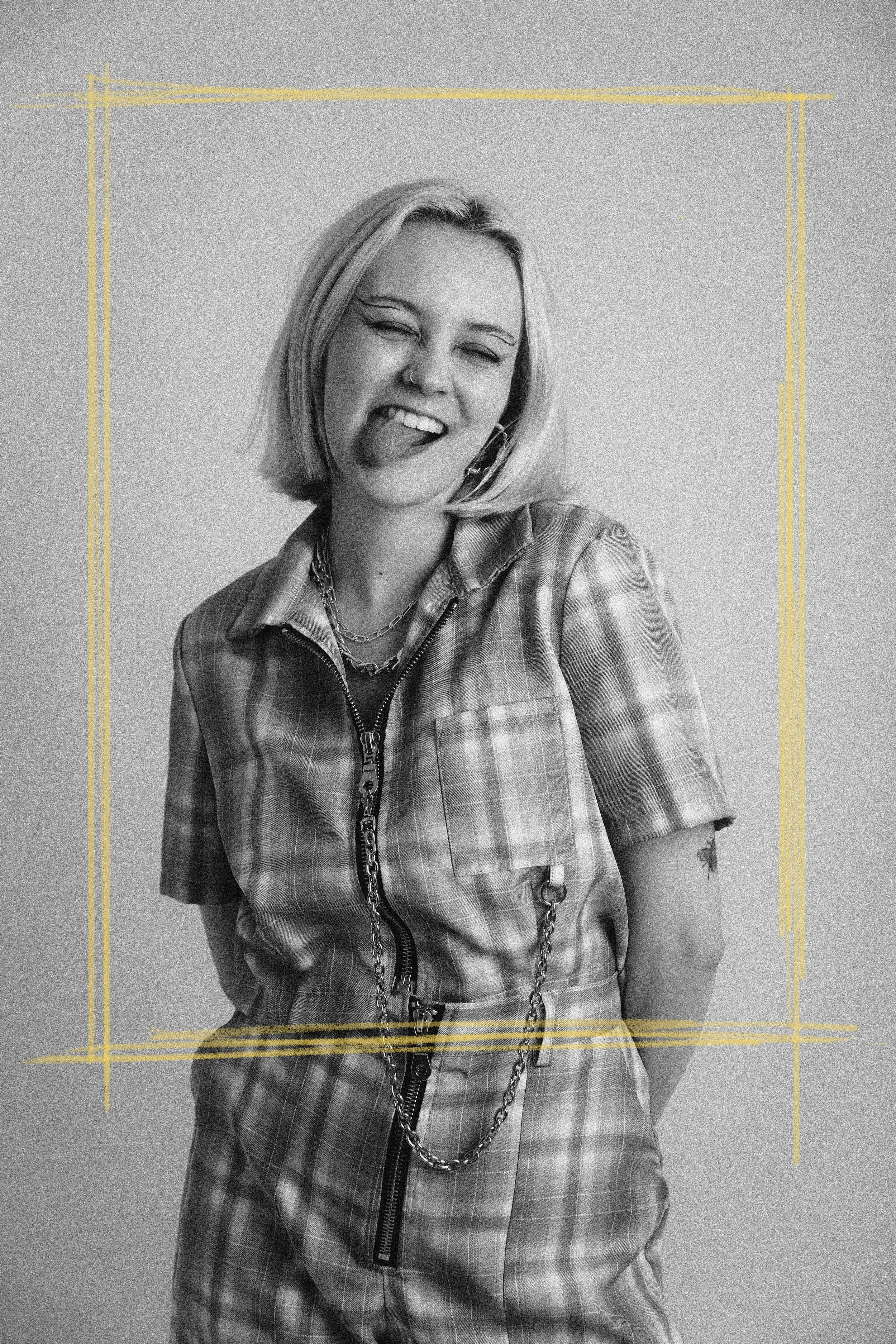
Sophie Smith (Hamartia/Headstrong PR), 2025 © Alia Thomas, www.aliathomas.com - please do not use without permission.
Why do you think it's so important that we have women like Hayley showing up in the industry like she is?
I think there are so many reasons, but I think it's the fact that she's there and taking up that space which is so needed to get more women into the industry. I love her vulnerability and all aspects of her newest stuff is just the most vulnerable I've ever heard her voice, her songwriting and everything. Vulnerability is such an amazing thing, and it's something that should be celebrated. We're in a culture of always having your back up. Someone's out to spite you or like, the way the world is, there's so much conflict, so to then be vulnerable in such a horrific time, is really amazing for young generations to see. I also love it because I’m the kind of person to wear my heart on my sleeve. I find it really hard to pretend I'm someone that I'm not, and I'm really honest. I think it’s great because Paramore is so associated with her, and it's been her whole identity since she was like 15 years old, but having the solo stuff to go in different avenues is really important to keep your creativity fresh and to have something solely for you as well. Because not everything, especially in a band situation, is going to go your way. She's a legend.
I'd love to talk to you about the podcast that you started and presented called Not a Groupie. Could you tell us a little bit about how that came about and what the premise behind it was?
Yes, basically Not a Groupie kind of started out a couple of years ago now, where ultimately I knew that there're so many people who want to be in bands, but they didn't feel like there were loads of resources for people that wanted to be in other aspects of the music industry, and if they were, it wasn't like the best, most welcoming space for women. Obviously from my experience and my producer's experience, we'd both had quite tricky ends to the industry where we'd had to just do a million different jobs and constantly be nice and constantly be ‘on’ and working. So I think there was the aspect of how do we then get people the resources that they need without the gatekeeping?… There's obviously a massive problem in terms of the gender gap in literally everything that exists, right? So there's so much research out there. There's this amazing woman called Vic Bain who does loads and loads of research into the music industry, music journalism and music education, and in basically every aspect of music education, women were outperforming men. From like GCSE to A-level music and more. So that made me think that there really is something happening here, and there are like so many reasons for that. There’s a lot of sexual harassment that happens. It’s very likely that we've all experienced some form of it, but then the attitudes towards women are not great. On some courses like production, there was like one woman in some of these courses out of like 30 people. There's always going to be an atmosphere there. Overall the podcast was about creating a safer space. I don't truly think there can ever be a safe space if you're labelling it a safe space, but a safer space for women, to get these facts, to get all of the information they need. Part of that was working out how we got that. You know, we're not experts in all of these job roles, so we thought let's just reach out and speak to people in these roles. There were some people that I messaged who I honestly thought would never say yes to this, but they did! So then it was about doing the research. It was interesting to see how many different jobs had really different stats… I think the main takeaway that I took from it is that a lot of the women that are in these roles have fought really fucking hard to be in them. None of it came naturally to them, in the sense of they weren't just handed opportunities on a plate. They were people that constantly had to prove their worth. I think that attitude is slowly changing, but when I say slowly, I mean really fucking slowly changing. There's some courses that you can do to get into some of these things, like degree level, college. Some of these are just start ups and hope for the best and just go for it. So it was interesting to hear how different people started their career, and then giving advice to the next generation as well, because yet again, I feel like the most common piece of music advice I ever hear is networking. What the fuck does that mean? What the fuck is networking? It's such a vague thing. Give me actionable things. Tell me, break that down. What is networking?..
OK, first of all, do you want to get into radio? Find some radio hosts that you really like. Break this shit down and go into:
- how do I approach these people?
- Where do I find them?
All that sort of thing. The podcast was a place for giving actionable advice. From that, I've stayed in touch with these people too, but this podcast did like insanely well. It got into the top 10 percent of podcasts most shared globally, so it's something that I really want to do again, but kind of do my own thing with it. In the years that I haven't done that podcast, things have changed, and I think I've learned so much about it. It's just basically like no gatekeeping information. Tell me how the fuck I do this and give that advice to the stories. Similar to what you do, you know, it’s important to give space for women to talk about the positives and negatives, because as much as the industry is changing, we don't want it to be all doom and gloom. It's really important that people are aware of the things that they are going to face, and also if we don't talk about it, other people who can fix this and help us fight for the change won't actually know the realities. There's less kind of outright sexism, but there's so many microaggressions. It really was just amazing speaking to so many people. We had such lovely emails from different universities and college students. I went back to my old university and did a talk there and had women coming up to me again saying that they don't even know how to get to the next step of their career because they’re in a course that's so male dominated, and don't feel secure and confident. I'd love to do some element of that again and actually create some sort of group. Which wouldn’t necessarily be a networking group, because I hate that term, but a group where people can actually help and give back to each other, because the more women that are in the industry, the more change that we're going to have, because there's allies there that can help us. If one person speaks up, there's another woman there to back her up.
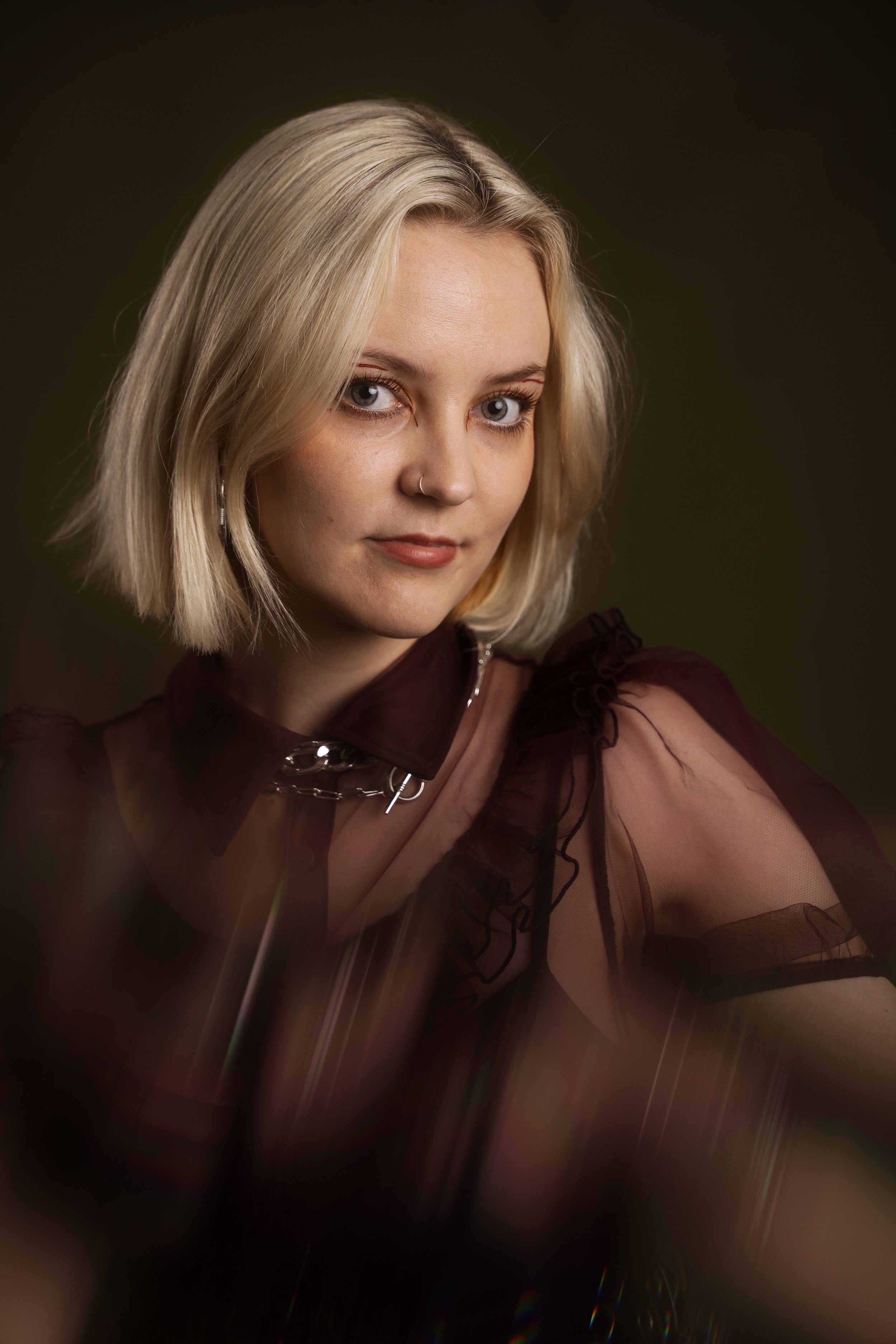
Sophie Smith (Hamartia/Headstrong PR), 2025 © Alia Thomas, www.aliathomas.com - please do not use without permission.
Yes, that's so true, and I think the community we build within ourselves will do incredible things. You now present a radio show called Changing Tune on Chaos Radio, which again is showcasing the best rock and metal tunes from women, non-binary and trans artists. A lot of your work appears to be very supportive of the underrepresented in music, which is amazing. Why is this so important to you?
I'm so passionate about it because of my experiences, but I think seeing how people get treated… I can't stand to just sit there and do nothing. I mean, for me, it's about creating these groups where I can create little bits of change and create communities in that, and I know that I'm not changing the world, but it's creating a safer space and giving people support, and in that time, we're seeing so many more younger bands of women and non-binary people and trans people coming through the ranks. It's fucking amazing because this is stuff no one saw growing up when we did. So to see this and for people to have that support, and for them to be getting national radio plays is amazing, but I think for me, it's always just been about knowing that there's a disadvantage for some people and then being like, OK, well, how can I make a change? Don't get me wrong, I'm passionate about this and I absolutely love it, but there's so much more that I could do personally. There's still ways I'm thinking, learning about my own bias and working out how to work on that. I think I've been thinking about how I can keep track of how many women and how many non-binary people are in the bands I'm playing, and people of colour too. There's so much more that we can be doing and trying to just be more aware of internal biases. So, yeah, for me, it's just giving people this platform and showing them so that they are being seen and know that people care and really love their music, because I think sometimes when you're starting out in the day and age of social media and creating content, you can feel like you're screaming into a void. Sometimes all it takes is that one person to say this band are on to something, and to be honest, there's been some big wins. One of the things I'm so proud of is that I started playing this band called Love Rarely who are now just like doing absolutely insane bits. I played their second single that they'd ever released on my show, now they've got a booking agent, they've got a label, they've got a manager, they've played with Casseyette… they're doing amazing, amazing things, going on tours and stuff. And to think that I was an instrumental part of that journey, like I am obsessed with that band and they know it, but they always say thank you to me for helping them along that way, because their manager literally listened to my radio show and found them. Like how insane is that to actually be part of someone's career in that journey like that? It makes me so excited to know that I was a part of it. They really are an amazing band though, they would’ve got there anyway of course, but like their styling’s amazing, branding’s amazing, they’ve got it all.
Ultimately I am everyone's hype gal, and I love to support my pals and love to support girlies. So to have another platform doing that, it's just awesome. When someone succeeds, I am just as happy for them as if it happened to me.
I really love that. Why do you feel there are still inequalities across the industry when it comes to gender?
Considering we are in 2025 now, I think there are so, so many reasons, but I think there is, for one thing, like no policing of these things. There's not like hard laws and hard rules. Even if there is, we know it's not legal to fucking sexually assault people for example, but we know it happens. So that is a massive part of the problem. There is no HR system in the music industry either. There's unions and things that can help, but there's limitations with what they can do. If it's law based, if stuff like this happened and, I don't know, if you worked for a supermarket or something, there's a HR system. There's people you can report it to. There's so many things. Going into things as grassroots artists as well, you are kind of taught to be lucky for the opportunities you have and you are scared of speaking out and ruining your career, which we get told doesn't happen, but it does happen. I think ultimately, there is so much that could be done if the powers at play actually put money into stuff. I was part of a women's feminist organization specifically with music, and one of the biggest problems that we saw and we faced ourselves was that there's so many little organizations trying to make the industry safer, but none of these are government funded. They are all raising their own money and that is not sustainable. It’s not sustainable to actually hire people and have full time jobs. There's no stability in that, and really, if there was money put into this, it would be a massive thing. In my time at Cactus City, we literally went to parliament to talk about misogyny in music alongside Vic Bain and Women In Control, Safe Gigs For Women. We all talked about our experiences, what we've seen, what we know, about surveys and things, and they basically ruled that there is misogyny in music, but we're going to do nothing about it. It goes so beyond music. It's a cultural problem and spite and hatred of women, where women's health is underfunded, there's a gender pay gap in literally every industry. It's ultimately so much more than just music, but obviously it's going to affect the music industry too. So there needs to be more funding into these organizations.
Hopefully we’ll see change with that in time. So not only have you done all of what we’ve discussed already, but you're also the co-owner of Headstrong PR. How did you start Headstrong?
We started Headstrong on a whim and it was kind of an accident. We're a DIY band in Hamartia and basically were working out how we could cut costs. From doing radio, I know what I like to receive from a band from a PR. I know how information should be structured in a press release. James wrote for big music industry publications like Guitar World and others, so he has really good written skills, and we thought we could do our own press releases and send things off ourselves. Be our own PR essentially. But we thought sending from the Hamartia email it doesn't feel professional enough, and we felt we’d have to have a company. So we kind of just decided to start a company. It took us ages to think of a name haha, but we just thought we'll just start doing it. We then thought that having one band on the roster looks a bit suspicious, so we started saying to our mates that we’d do your PR for free because ultimately we're trying to do our own PR, and it's just easier if we have you and then you've got some free PR and it's all cool, and it just snowballed from there. It was a complete accident, and it all progressed from there. We have paying clients now and are helping loads of underground bands create PR campaigns and branding and stuff, but it's been a whole labour of love. We've learned so much in the year and a half that we've been doing it now. So much. As I said, we just started everything on a whim and didn’t have any idea what we were doing really, just knew a couple of basics things from what we’d experienced already, and like I still don't know if we're doing it completely right. I've not had any PR training. I’ve seen what other people do but I've not been behind the scenes, you know? But it’s been working out, we've done some great stuff in that year and a half, got big publications involved and bands have been happy. It was just a complete accident, haha.
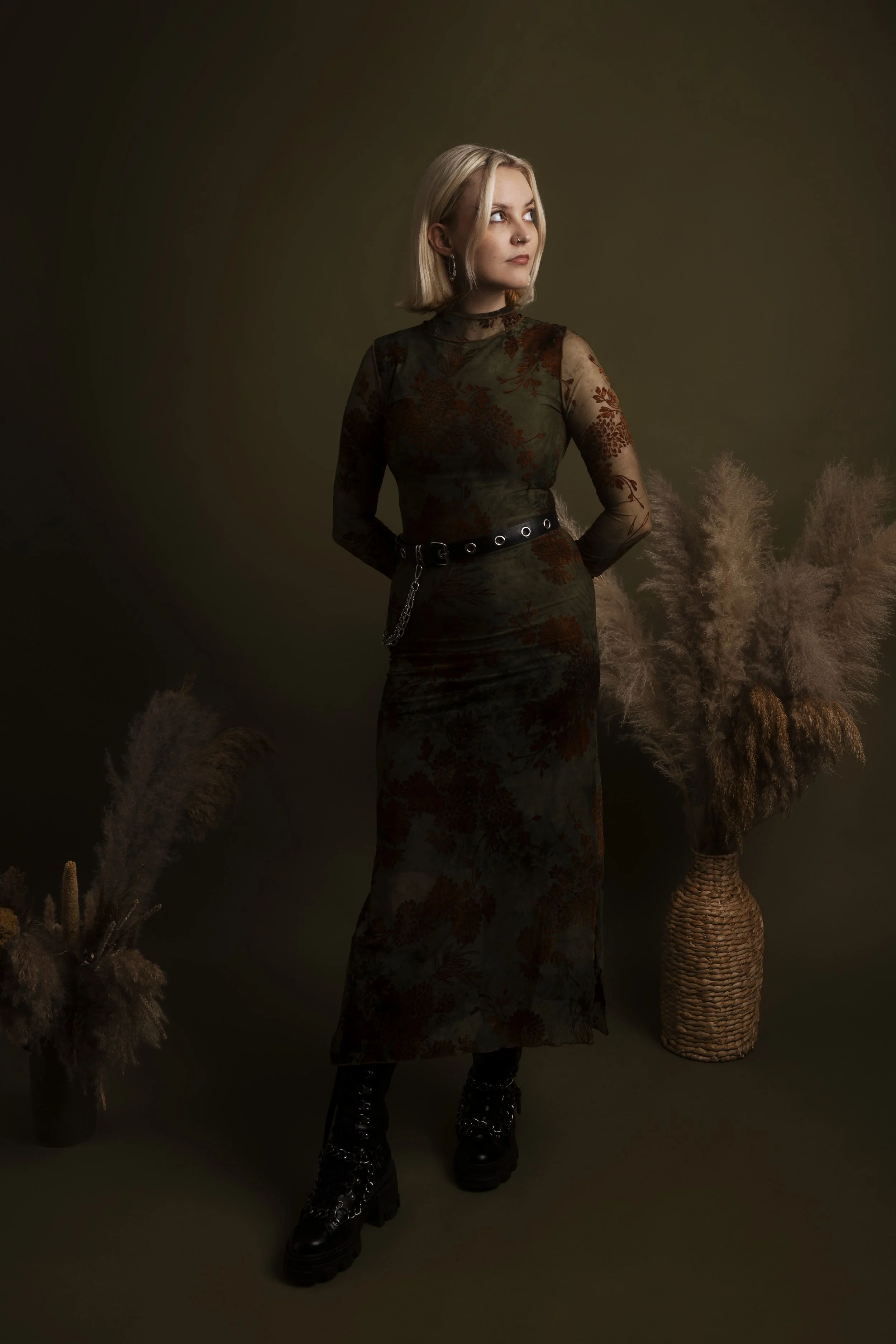
Sophie Smith (Hamartia/Headstrong PR), 2025 © Alia Thomas, www.aliathomas.com - please do not use without permission.
So you've got both sides of the spectrum in terms of, you are the PR, but you're also in a band, so you're covered quite nicely. As someone who both promotes artists and is one yourself, how has working in PR changed the way that you think about your own band's image or strategy?
That's really interesting actually, it's kind of changed everything, to be quite honest. I think like learning from PR and seeing the reception that we've got, and other bands have got, you kind of pick up on things that you're seeing successful bands are doing and makes you consider what you’re doing for yours. I think the one thing that I kind of thought about the most was actually like in my head and, I know what Hamartia is, but is that being portrayed in the way that I think it is? So I think actually sometimes it's like creating those formal documents and being like, OK, what is our colour scheme? What do we stand for? Who are we? What is our unique selling point? And having that, because then you have something to refer back to and be like, OK, that's really interesting, is this still where we’re going with it, you know? I think when you have those, when you are so sure about those things, it's so much easier to sell yourself to people because you know exactly what the mission statement is, essentially. We kind of knew those things, but they weren't as refined, and it's definitely given me a new lease of life for the band because I've seen what other bands are doing and how much success they've gained from doing that. I guess I think I've basically treated the band a lot more seriously because I've been like, oh, actually, if I tried really hard, I do have the skill set to do something cool with this.
Do you ever find it difficult to separate the creative mindset of being in a band from the strategic mindset of being in PR or do they actually complement each other quite well?
It's kind of both. It's really hard and it's also good sometimes. I do find now that I know so much more about the music business, I find it harder to just do things without a reason to do it, if you know what I mean. So before I'd be like, oh, fuck it, let's just take this gig in the middle of nowhere and do it, but now I'm actually thinking more so about whether we should do it. I think it's helped more with the world building of Hamartia. So before you kind of just go, “oh, I want to play a gig, I want to write a song, let's do this” and now I'm like, OK, well, how do I build the world of Hamartia? What is in that world? What is the next step? Yeah it's been really good for that and really good for setting goals and staying on track. Sometimes I do wish I could kind of go back to the naivety of my 15 year old self, just writing poems and songs in my bedroom. Who just loved music for doing it for me, whereas I'm still doing it for me, but as soon as you get like a slither of anything doing remotely well, you're like, I want this. Like it's so addictive, which I think also is really hard with social media, because there's kind of that instant gratification of like your post doing well. You have to really have a strong head on your shoulders. So yes, I do really struggle to have to separate it all, but this is similar to what I mean when I said earlier, that I have to kind of compartmentalize different personality traits of mine to help me.
But that thing of, you know, OK, well, who am I outside of music? Well, I have to go outside and touch grass, you know, ground myself again. It's really important. I have to think, if I take music out of everything, who am I? I am a gardening girlie. I love to grow vegetables. I love dogs. I love to read, and I have to just ultimately come back to that and go, that is me. Then there's different aspects so that I just can actually relax, and I think it's been good for helping me set firmer boundaries with myself to be like, OK, I actually don't have the mental capacity this evening to think about the band, to think about PR, to think about radio because I need to just be Sophie Smith. It's still something I'm learning, and that is probably my biggest thing I need to work on this year really, because it's that whole thing of, you know, our whole lives end up just revolving around social media and being online. For me it comes from the fear of growing up in Cornwall, being so rural, so away from everything that now I'm so hungry to do something good in the world, and something that I enjoy, that I feel bad for not being accessible 24/7.
I think that's such a universal problem, isn’t it, because, again, as a fellow creative and self-employed business owner, it’s really difficult to switch off from that version of myself who’s running a business. So I'm going to take what you've just said, because that is so right. You do need to remember to be Ali or Sophie.
Otherwise you take the insecurities from each part and then bring it into who you are as a person and being constantly like, OK, this is your fear and worry. Then all of this stress becomes this ball of who you are and that's not who you are. It's been something that I've actually learnt. This whole idea actually came from my vocal coach, because I often have this thing where I feel I have to replicate what everyone else is doing. For example if I'm doing a cover and she tells me, “no, but you are Sophie Smith. Yes, you're also Sophie Smith, a vocalist, but you're also Sophie Hamartia, and those aren't the same either.” It’s kind of like having many alter egos, essentially, because they're who I am on stage. There's obviously elements of who I am on stage in who I am as Sophie Smith, but that's not completely who I am. That's like a dramatized version of me. The kind of most flamboyant version of me. Deep down, I'm just a girl that loves to garden, you know. I highly recommend everyone do that, to be honest.
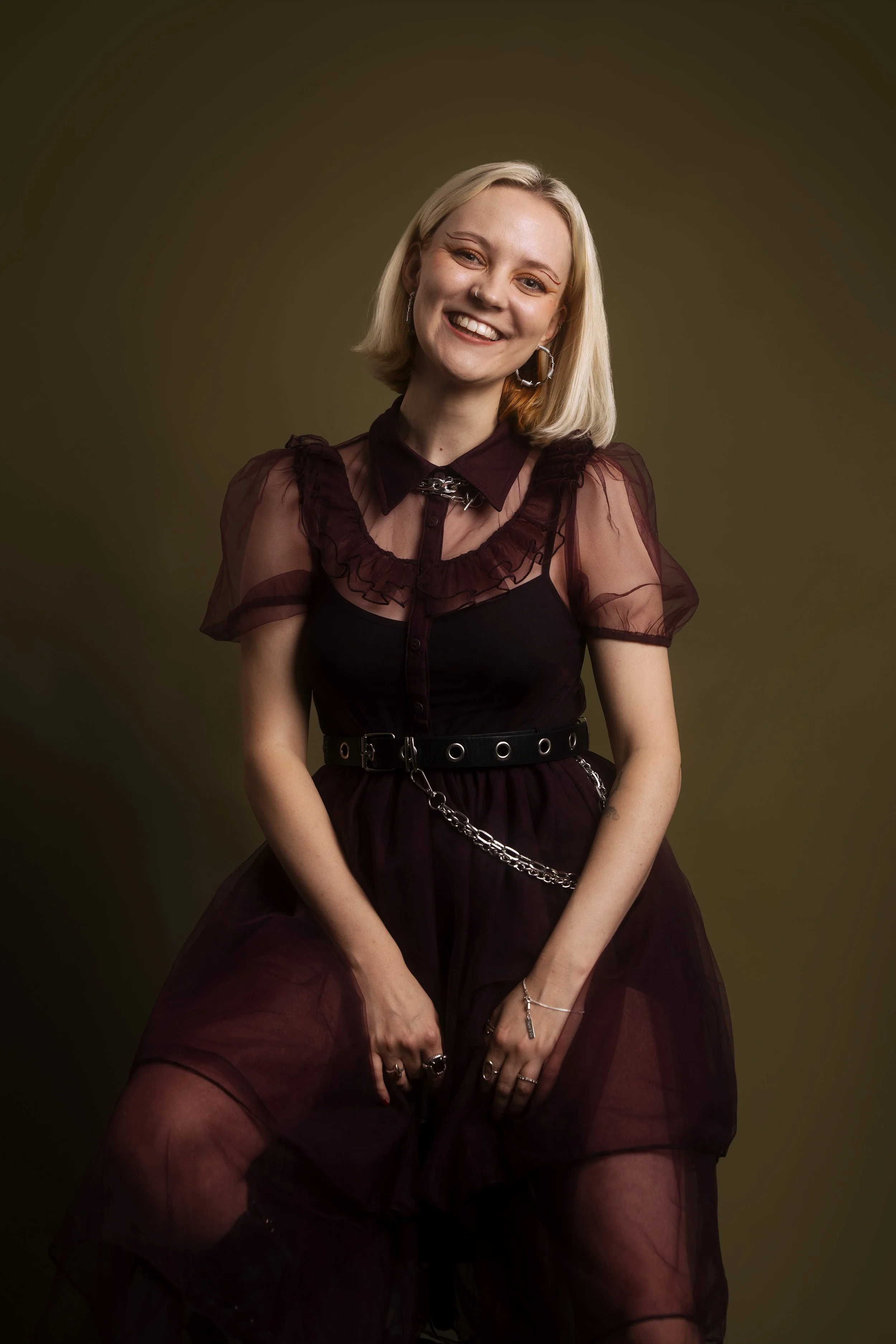
Sophie Smith (Hamartia/Headstrong PR), 2025 © Alia Thomas, www.aliathomas.com - please do not use without permission.
Me too. From an outsider's perspective, someone who sometimes deals with PR, this seems to be an area where women are often seen to be. Do you find that too?
It's funny you say that because, yeah, that is something I've noticed. I don't really know why. Like I love to see it, but I think there's also the element of women generally being pretty good at socialising and meeting people. I think we see a lot of strength in community, and I think a lot of PR is the most sociable job you could have. Your job is about meeting people, remembering them, remembering who they are, remembering what they're like, and then remembering that so that when you have an artist that you think is going to be like, “oh, hey, Stephen, how was your five mile bike journey the other day? I saw that it was raining in your area. I hope you didn't get splashed. Here's this band I think you're going to love. It really reminds me of that time that you talked about loving this specific band when you were 30.” I mean, it's just like the ultimate memory game. Other than that, I don't think I can answer that any further because I genuinely have no idea why, but it’s really nice to see because I feel like I just love to see women dominating anything, really, and the fact that most music industry jobs seem to be very male heavy, to then see so many sick rock and metal PR companies that I see, that I’d love to work with in some capacity in the future, that are like founded and fronted by women. I fucking love to see this. I’d have to ask them and be like, why do you guys do this? Because for me, it was an accident, you know, haha.
Yes, it definitely feels like it’s one area of the industry where there's more of a gender balance. What's something you wish more bands understood about PR and how it works, especially DIY or underground acts?
I hope now, people know that PR isn't something that is guaranteed. Press isn't guaranteed from PR. You can't guarantee that it’s going to be well received, but actually, the thing that I have learned from working with so many bands is that you have to have a world around your art, around your music. Music isn't enough in this climate, in this day and age of content there has to be more. So then going into that and being like, OK, well, your music's great, but we need to work on branding, you just have to. I think when you come into PR and you're really sure about your act and the world you're building, it's so much easier to write and to do that. You are a team with PR. Like it can't just be you solely relying on PR. You have to be active on socials like this. That is a must in the industry. I guess it's really about world building. It's like you have to be really sure about that. PR is such a weird thing to explain to someone because it's not the same for every band. Everything is so different. There's so many different lessons I've learned from each artist I've worked with because something different happens each time. If you're doing music now, you are not going to have a successful PR campaign unless you’re so sure of who you are and what you're doing music for. You have to just have everything together. PR is not something that you just do on a whim. You have to be ready for PR. Whereas, I think some people just see it as like, oh, yeah, I'll send out a few emails and I'll be on Kerrang!, but that's just not how it is. You have to believe in it for other people to believe in it.
Do you notice different challenges for women when it comes to promoting themselves or getting press attention?
Yeah, it is an interesting one. I think that sometimes I do notice that in terms of like if we're talking specifically press, I think things are changing. I don't think it happens as much in heavy rock and metal music, but in terms of things I've observed, you see some female artists that just get asked about absolutely insane things in interviews. You might've seen the really viral Ariana Grande interview where they're asking her, “what would you choose if you had to pick between your phone and makeup?” And you just think, is that genuinely what you think women struggle to choose between? And men will get really insightful questions. I haven't seen that as much in rock and metal. Fortunately, I think it's a pretty progressive genre. I think people are more aware of things, but there are still some things where people can be a bit archaic and maybe not ask the same questions, like more microaggressions. But I've also noticed in any industry with sexism, a lot of female bands are accused of being industry plants. I cannot remember the last time that I saw allegations of industry plantation against men. It's always women, which is just so insane to me because we have to work and fight so much harder to get people to give a fuck about us. To then work and put literally all your eggs in one basket, fighting so hard, to then just get accused of someone picking you and going, “yeah, I'm going to chuck thousands, millions of pounds behind you” when you've literally been living on a fucking bread line for years trying to make it happen. Yeah, that's just kind of insane. Obviously in terms of as a woman promoting yourself on your own channels, there is always sexist shit. There will always be people like “girls can't scream. Girls can't do this. Girls can't do that.” And it's just so boring now. There's probably an element of people simply loving to piss people off, and rage baiting. I mean, granted, this isn't all the time, but it's surprising how many people feel comfortable saying these things on a public platform with no fear of anything. It's just insane.
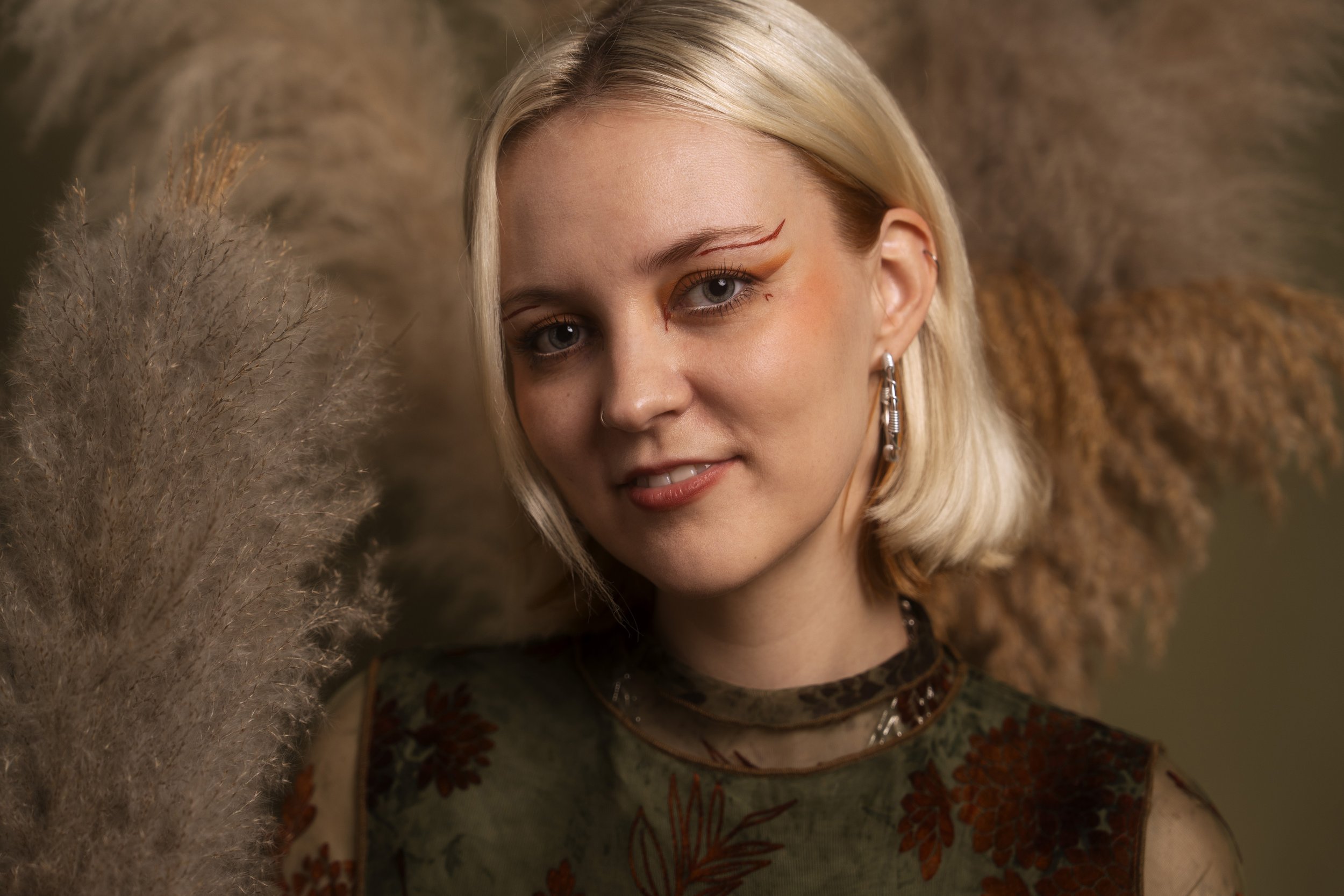
Sophie Smith (Hamartia/Headstrong PR), 2025 © Alia Thomas, www.aliathomas.com - please do not use without permission.
So, Sophie, in five years time, what would you like to see the industry looking like?
There's so many things I would love to see. I guess for me, there definitely is a rise in female and non-binary artists coming through, and I absolutely love that. I just want to see more people across all areas advocating for inclusivity, not just in lineups, but in crews. Being really aware of accessibility as well. I've learned so much about accessibility in the last few years and, you know, being really conscious about making sure that the onus isn't just on disabled people or women. It's a shared responsibility of trying to make everything more inclusive, and also so much more funding going into organisations that are succeeding in doing amazing things, but just need more funding to carry on doing that and make bigger changes. There's so many amazing organisations that I've worked alongside or I've just really been amazed by, but they are just constantly seen as that they don't have the money that they need to have to create actual systemic change within the music industry. Ultimately, attitudes are getting better and things are becoming microaggressions instead of massive aggressions, and some of the microaggressions I’ve definitely noticed less of. But I think it's less kind of patting people on the back for doing the bare minimum and just it being a standard.
Lastly, what do you feel would be the best piece of advice that you could give to fellow females, non-binaries, trans musicians, and not even solely musicians, but generally for those who want to get a role in the music industry? Maybe they have aspirations of PR, or perhaps they have aspirations to be another role in music. What do you feel would be your best piece of advice for anyone aspiring?
I think basically having a ‘fuck it’ mentality of just putting yourself out there. Be bold, chase everything, and don't let people make you feel bad for that. Take and create. Just go for it. Create that community around you. Only associate with people that are going to boost you up. Don't have time for anyone that's going to try and bring you down. Like if we bring people up, we all rise together. I’m obsessed with community, as you can probably tell, but yes… be bold, be out there, push yourself and create that community. So if you do need to fall back on people, you have that. I think if I could do everything again, it’s so easy to say now but I would say, believe in myself. I would be of the mindset that, actually, the more that I put myself out there and be like, fuck it, I'm going to ask for that opportunity or fuck it, what's the worst that can happen.
Also plan to succeed. I think like my whole life, I've not planned to succeed. I’ve always thought it might happen, it may not be that good, and then I succeeded and didn't actually plan for it so I became a bit like, what do I do now? I mean, there's so much advice I can give, but honestly, just go for it. Create a community and be outspoken. I think we can all be scared of change in opportunities, but the more I've been outspoken hasn't meant I've got less opportunities. In fact, I've got more because people have been like, oh, I feel safe around this person or this is someone I want to associate with. So like just be an advocate, be a hype gal. Be a legend.
Be a hype gal. I love that. Everyone needs to surround themselves with hype gals.
I’m very grateful to have spoken with Sophie, so thank you Sophie for taking the time to chat and shoot with me. Hamartia, just last week, have released their latest single, ‘Synthetica’, which you can listen to on all streaming platforms and watch the video below.
If you want to follow Sophie and all of her exciting endeavours, you can find her on Instagram at @soph_hamartia and Hamartia at @hamartiabanduk