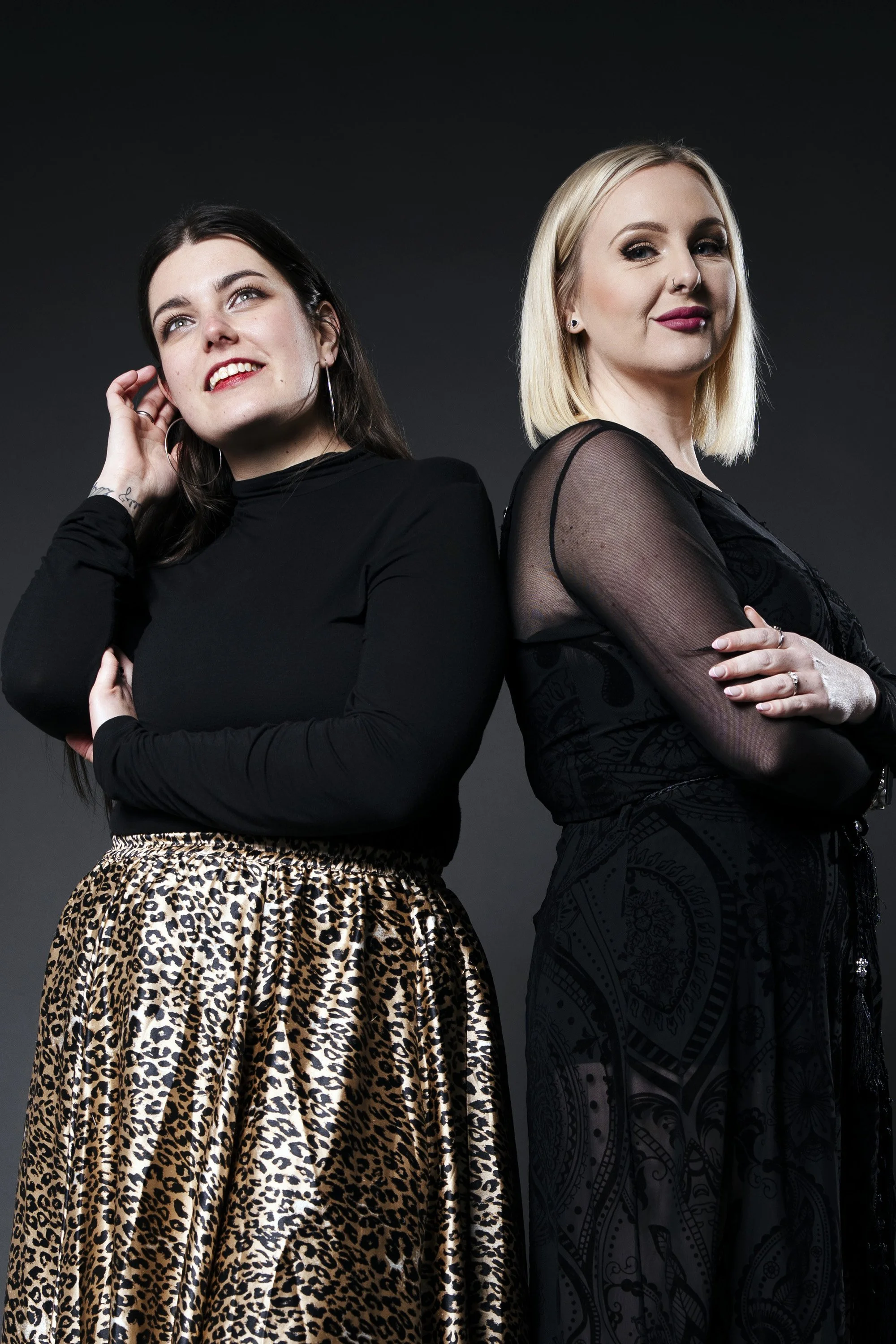
Dani Hewitt and Jess Dyer have a lot going on. They’re lecturers in music, both carrying out PhDs alongside it, and they are the founders of The Fan GRRRLS Podcast. Within this series, we’ve so far heard from those in the industry who are in the thick of it on stage, touring, making music, but Dani and Jess are in a completely different part of the industry. In another life, they were part of that world, but their careers took them on a different path where they’re now educating the next generation of this incredible industry. I’m so pleased to have Dani and Jess involved in UNMUTED because what we talk about in this conversation is from a completely different point of view to what we’ve heard so far. We speak a lot about the backbone of the music industry; the people who carry artists to their success, and what the industry depend on to keep it all going. The fans. We also touch upon Dani’s previous experiences making her way in the industry doing varying roles ending with being part of touring crew, and Jess’ experience as a musician herself, and what led them to changing their careers into education. We’re all a fan of something, so there will be a lot in here that people can relate to, but not only this, the knowledge and passion that Dani and Jess have on the topic of fandoms and the importance of the fans is inspiring, and you will no doubt learn something very interesting from this. So, take a break, grab a cuppa, and enjoy.
First of all, for those who aren’t aware of you and what you do, could you introduce yourselves, please.
J: I'm Jess.
D: And I'm Dani.
J: And we do the FanGRRRLS podcast as well as a range of academic work to support our studies of women in fandom.
Where did your interest or passion for music start?
D: I feel like music's just been a part of my life. The earliest memories I have around music are my uncle in his bedroom just blasting out Metallica, and then walking into his room where he had spray-painted the Metallica logo and the snake from the Black Album on his wall, and my grandmother kind of going nuts.
J: Interestingly, this is kind of what actually started a lot of this work for us because we both found that we both had male role models that introduced us into music, that drew us into part of the fandom. And there was a development of either us going further into that fandom, chosen by our male role model, and concerns about rejecting the fandom and finding things that were more feminine that may not have been authentically chosen or approved by those male role models. And as lecturers, we were able to talk to a lot more with our female and gender non-conforming students that had kind of similar experiences that there is a gateway into fandom that is usually through a male role model because their fandoms are going to be more accepted. Their interests are going to be more respected and valuable. But also, there's kind of no discussion about our mums, our sisters and our grandmothers, what are they actually interested in? What are their fandoms?
D: Because I think once we started asking ourselves that question, we kept thinking, why don't we know? Then once we did know, we couldn’t believe they were into that.
J: We would take the mick out of them.
D: Like my mum was obsessed with Marty Pello…
J: And my Mum was obsessed with Take That.
D: And I'd think, oh my God, how uncool. It's such a mum thing. But that just how were taught to think about it.
J: And just purely based on their gender and how we respect those genders. It also made us respect certain interests and fandoms, and that was actually a really big part of how we started talking about this, thinking you know, this is weird.
D: And I think it's certainly having that similar experience as well, isn't it? It's the similar genre of music as well. If our early memories or early experiences are rooted in this metal genre of music.
J: Which is traditionally gendered already.
D: And everything sort of stemmed from there, but definitely like, I have early memories of Metallica being blasted.
J: Yeah, I think for both of us, our role models are exactly the same.
You’ve clearly been interested in music for a very long time, and your current jobs, and your PhD, are all focused within it...
J: Yeah, we both work at music universities as well.
So it’s a big part of your life. Dani, you've had previous experience outside of education within the music industry as well. Could you just go a little bit into what kind of jobs you've done previously?
D: Yeah, absolutely. So I realised that I was not musically talented, but all my friends were and I was hanging out with bands. The first steps I took in the music industry were that of a music promoter. And I started organising just shows for my friends to play at, because I'd regularly attended gigs from a very young age. It's a very different time in the South Wales Valleys where I was 13, going to shows. So I might have been a little bit younger. I think it was just before my 13th birthday. But anyway, that was the first sort of experience into it, and then by the time I was 18, I started putting on my own shows. From that, I went to university, and I found a lot of opportunities to volunteer. So I've done a lot of festival work, I've worked on box office. I've worked as a ticketing administrator for a promoter. I've worked Reading Festival, Download Festival, Slam Dunk Festival. I've done some touring where I've worked on merch. I've done some organising of tours, booking bands into venues. A little bit of everything that goes along with hanging around with the band, essentially. The nature of the industry is you think you're going to go and do one thing and you end up doing about 10 other things as well.
I have mostly been freelance and self-employed during my time in the industry, whether that was putting on my own shows or just finding opportunities to take on projects and working with other larger promoters or larger organisations, and then I did work as an online events and marketing manager for Stereoboard.com, which are predominantly a ticketing website where they sort of link you with either resales or just on sale tickets. I worked with them as their marketing manager. So I did social media for them and that was just before I then went into teaching, but I did get the opportunity to do some press work for them and someone handed me a photo pass one time and I photographed bands at festivals. So it is a little bit of a jack-of-all-trades situation, but it has been sort of situated mostly around artists, whether that's through development, whether that's putting on shows, whether that's working at festivals or doing the marketing for them as well.
And was there an area that you really enjoyed more than anything else out of all of that?
D: Music promotion, running my own events. That's what I absolutely loved. I loved working with up-and-coming talent. I loved curating a program for an event. Yeah, that is what I absolutely love. That's what I wanted to do forever and ever, and I guess anything I've done around that has just sort of been like the cherry on top. I can't believe I got the opportunity to do these things, but I always enjoyed my time working in the industry and I volunteered with a local youth group and then became a volunteer coordinator through that youth group. That's where I found my passion, I guess, for mentoring and teaching that kind of led me on a different route.
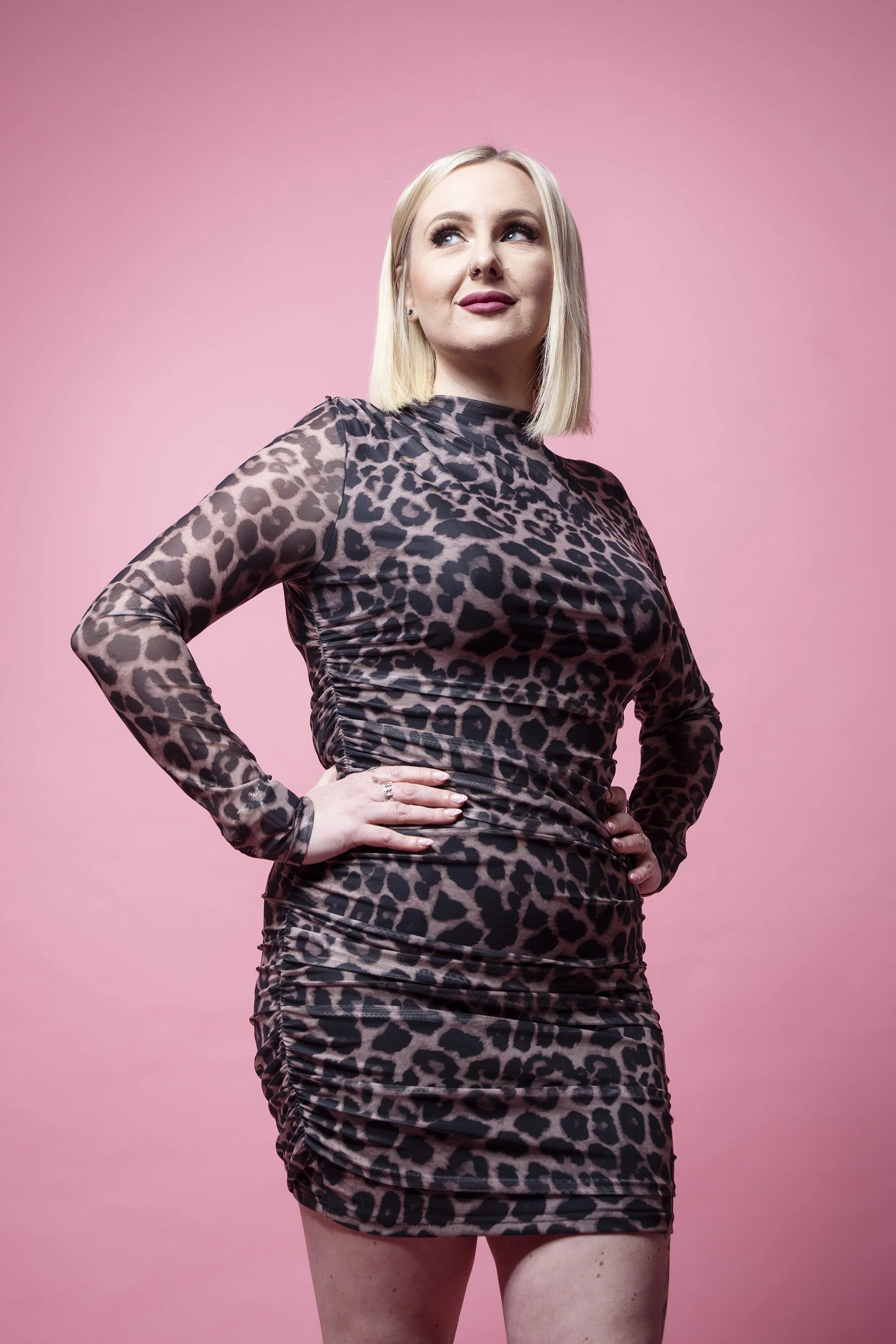
Dani Hewitt of The Fan GRRRLS Podcast © Alia Thomas | UNMUTED - www.aliathomas.com - do not use without permission.
And Jess, you're on the other side of things because you've been in a band. Are you currently in a band still?
J: No, I do some covers. I used to be in a band. I started when I was really young. My dad was a vocalist, a performer and found out I could sing. We started doing a duo together and then eventually it grew, and we started doing originals and then we started touring all around the southwest. We got signed when I was 16, and then we were touring around the UK and then we did Glastonbury Festival and stuff like that.
That’s incredible that you did all this all with your Dad!
Yeah, me and my dad. My mum used to manage us too. All my brothers would come along, and we would camp around the festivals where we were performing, but I stopped doing it when I was like 21 and it was essentially when my body started changing. I wasn't a young girl anymore, so my talent wasn't enough. I missed the unique selling point of being underage, like it just changed and it really impacted the way I viewed myself. So I went into creative workshops around theatre and holistic practices. I did a lot in Bristol where it was helping refugee women - it was theatre workshops to explore their food and culture. So we would help them to settle into Bristol by doing these workshops where they would bring in recipes and we'd discuss all their foods from their homes. So that's what got me eventually into teaching, but it was also from that experience that I had in the band and the way people would perceive you or talk about your body, or touch you or say things about you... It was a really weird experience and unfortunately I'm just not comfortable being on a stage anymore, and I haven't really done much of it since because it really threw me off the way people would talk about you. I guess when you're a child doing it, it just kind of sticks to you. It's like a big element of how you view your body.
It’s a very vulnerable age at that point.
J: Yeah, it was like complete teenhood going into adulthood and it was the foundational thoughts that I had about my body and the way I should dress, the way I should look and what people appreciate the most in order to appreciate my voice more. And being on stage, it was very, very odd. So I don't really do it anymore.
It’s a real shame you were made to feel this way and Dani, I appreciate that before you got into teaching you also stopped the work you were doing due to how you were treated as a woman which we’ll touch upon later, but it’s sounds like before those experiences happened you both had an amazing time in the industry.
D: I've had the time of my life in the industry, and we couldn't be educators for that industry if we didn't believe that there wasn't something that was fundamentally important about the arts, which I absolutely do.
J: And the behaviour also isn't just the industry, it's the audience as well, and that's why fandom's so important. Because from my perspective, it was all audience. It was the way people would grab at you, talk about you, think that they had ownership on that type of information... Whereas Dani’s coming really from a professional side. It's like culture through and through. People put the onus specifically on the industry, but it's also how we're perceiving the industry and what entitlement we have engaging with the industry, and therefore, how we're treating women or gender non-conforming people or people of global majority or people with disabilities, like whatever it is, but our audience etiquette and our understanding of culture and identities also needs to significantly shift to shift the power in the industry.
Absolutely. You're both doing PhDs relating to the industry at this point. Could you briefly give us an insight into what it is that you're looking at?
D: What I will say before we go into this is what I thought I would be researching is not what I'm actually researching.
J: And if you were to talk to us in a year, it would probably be different again haha.
D: Originally, I was looking at the commercial exploitation of female fans because there was something that was not sitting right with me about how fan labour is creating these global artists and then potentially at a certain point, that's not good enough, and they sort of move to the men as authentic fans, and I kind of wanted to explore that more.
In my first meeting with my supervisor, they asked me what sort of genre of music did I think I’d look at, to which I mentioned that I was a fan of rock and emo music so I’d naturally gravitate towards that probably, and then they asked me what bands I liked, which, after that discussion got me thinking about the fact that I could do a PhD on all the bands that I love, and research all the things that I love. So for my PHD, I'm mapping the South Wales emo music scene, and its cultural memory. My title is still a work in progress, but essentially, I am looking at the relationship between the bands from South Wales from around 2000 to 2015. So we've really got kind of like a heyday of this type of music, this genre of music, and I am calling it emo, even though no one else might call it emo, but I'm calling it emo because of the fans that were there, and because the fans identified as emo, and so I'm sort of retrospectively adding this term in and saying it can be thought of as this sort of scene. So I'm looking at the relationship between the bands, but I'm also looking at the relationships between the infrastructure in South Wales, and also to the wider music industry. Then as another layer on top of that, I'll be looking at what the role of fans was in creating and sustaining that music scene. So I'm kind of doing an archive. I'm doing a cultural history project, essentially, of the music scene that I'm from, and that has massively changed from my first idea, but it feels right.
And yourself, Jess?
J: So mine didn't have as much of a big shift as Dani's did, it just kind of evolved, I guess. I always knew it was going to be around gender. I was always really interested in our cultural production as women in fandom. So the things that we make, whether it's online communities, whether it's events, whether it’s projects like Unmuted, where you're bringing women together, but it's all stemming from fandom and interests. But then as I was reading a load of literature on fandom, I kind of identified three core problems.
One was that most literature is written by men. They're about male-dominated fandoms/fans. The amount of stuff that was on Doctor Who, on Marvel, Lord of the Rings, Star Trek, and I just felt so tired of reading this now. Then there'll be this tiny little chapter about women, which is usually Beauty and the Beast’s fandom (weird as fuck), and then it would be a little chapter about sexuality, usually about fan art when fans would ship two characters to make a queer romance. So it would be something like that, which are incredible elements of fandom, but that would be it. That would be our entire thing in the book. So that annoyed me that we were kind of secondary, or even just marginalized completely, from the storyline of fandom history when we have championed so much development for fandom history. I can't talk about fandom without talking about Elvis Presley or talking about Frank Sinatra and the Bobby Sock girls, and we can't talk about all the metal industry or about K-pop and pop culture without women. And the Beatles!… it's just so bizarre. So that was quite annoying.
Secondly, there was this position that was happening in fandom research that the core element of fandom that theorists argue over and over and over again is called the gift economy. So, in fandom, we are about gifting one another, the things that we make, the language that we make up in fandom, the behaviors that we have, the traditions that we have, and you do not make money from it. That is a center point of it. Otherwise you're moving away from fandom and you're just moving into mass culture, and the reason why that's so important is because there's been a long arching history of, if you're associated with mass media, you're kind of easily manipulated, and not that intelligent. You're just kind of lesser than, because you're into popular culture and mass media.
So there was this really big drive for fandom theorists to showcase that fandom was not the same as mass culture. And this is why. One of those reasons is because people in fandom don't make money, and what I was really interested in is actually all the women that I know in fandom start developing their fandom practice into something that's more commercial, and they make money from it. For some women it leads to financial independence, maybe it leads into a freelance career and helps women move into the creative industry, and I'm absolutely obsessed with that. Forever Emo, who does all the fan artwork about Bring Me The Horizon, Biffy Clyro… all of my wedding decorations are from her! So you're telling me to be considered authentic in fandom, we're not meant to make money, but this is the most amazing, talented, niche area of fandom that I would rather spend my money on, sometimes more, than buying loads of merchandise directly from the artists. Like this is great. So that was the second thing...
Then the third thing was that fandom theorists would defend fandom using those points, including not making money from fan labour, and would conclude saying “ah, it's because we have agency”. Not really breaking down what that term meant, and also dictating who should receive that label. So, I started copying that kind of language and structure for the way that I was arguing about women and our cultural production. I would show my work to my supervisor, and conclude saying “this means we have agency”, and my supervisor would ask, “but what does that mean? What does that look like? What do you perceive as agency? What do those women perceive agency as?”. I didn’t know the answer, and it wasn’t fair that these male theorists got to tell us whether or not we had agency. And that's kind of launched the whole beginning of my work really, which is actually how do women perceive and understand agency within fandom practice, and I've been trying to figure out where I am specifically locating agency, and what do I mean by the term, especially as it is so broad. And I think because I'm really interested in that commercialization that women fans are doing, I want to look at entrepreneurship in fandom.
Because, to me, agency is this set of interpersonal skills, soft skills, transferable skills that help me to a future that I want, that is chosen by me, where I can challenge the barriers, and when I think about that in a fandom setting, it's women that may have not been seen in those fandoms, overcoming that barrier, making their own merchandise, setting up their own events, taking it to places in the industry where it wouldn't have been as safe, where they wouldn't have been recognized or as welcome. It's even overcoming the financial side. Because it's expensive to be a fan! It's a lot of money. So if you (the fan) are making something that's economically viable, that's sustainable, that isn't being made by fast fashion or commodified in some kind of way, surely that’s symbolising women’s agency in fandom practice. So that's what I'm looking at is, how do we perceive and understand agency within our fandom practice.
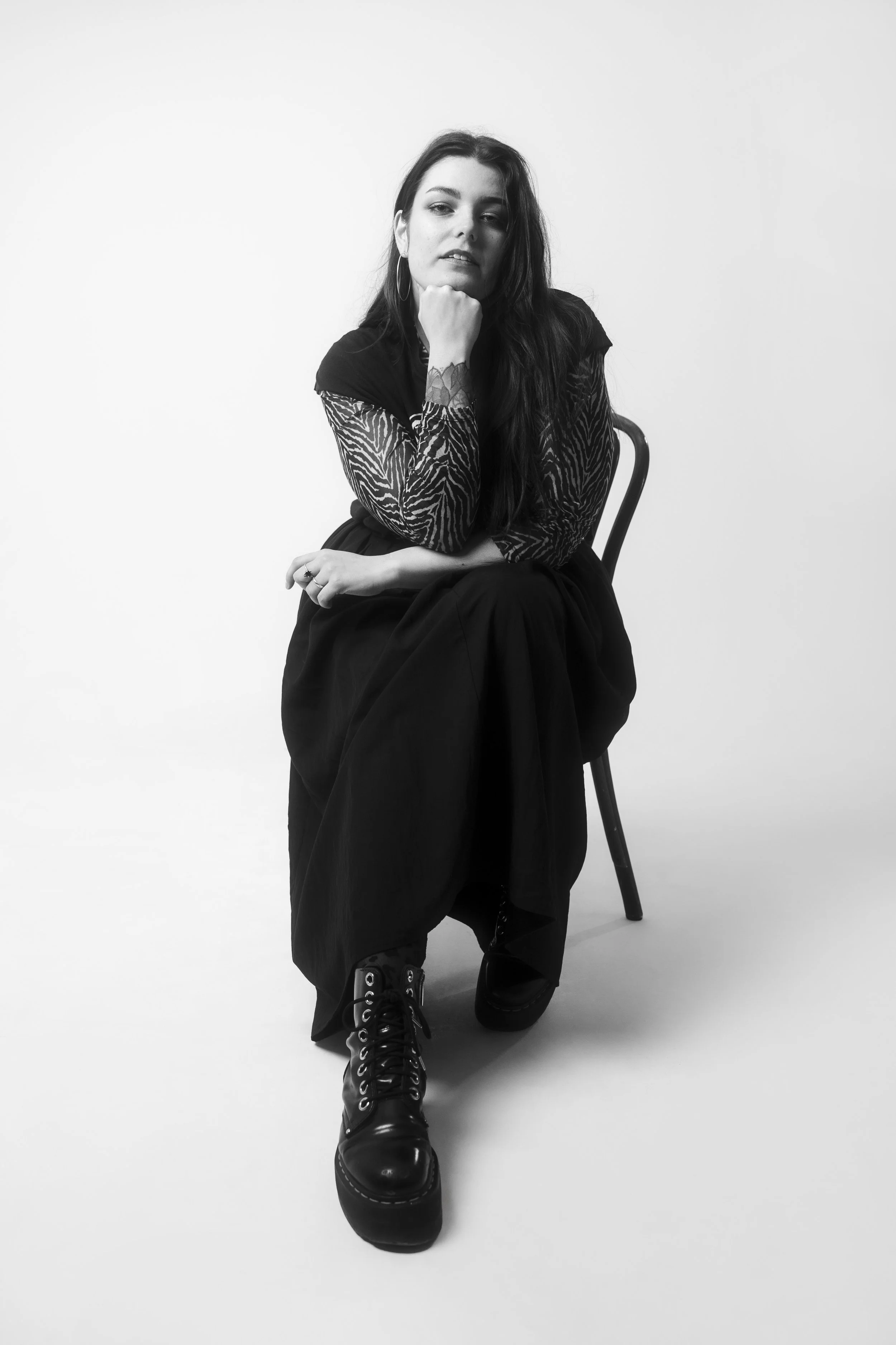
Jess Dyer of The Fan GRRRLS Podcast © Alia Thomas | UNMUTED - www.aliathomas.com - do not use without permission.
They both sound very interesting, and it's interesting that you've both gone towards looking into the fan side of things, and I assume that's where your podcast came from? Before we go into that more though, I’d love to know, how would you personally describe fandom?
J: It’s when you have an investment in something - active investment, active engagement. It's moving from the passive. A passive example is if I was watching Friends on TV, I knew when the new episode was coming on Thursday at 6pm. I would watch the series a couple of times, maybe know a couple of quotes. It's just like a passive engagement with it. My active engagement moves from into other activites, maybe like doing online quizzes to know what character I am. Maybe it's to buy the merchandise. Maybe it's finding other fans to chat about the series and going onto online communities and going “oh yeah, today I'm Chandler and I do this and this and this”. It's like when you actually start actively engaging it in your own space, your own time and with other people, is kind of the best way I could describe that activeness. You're moving from just like one-on-one engagement with that cultural product, and that cultural product is now being reimagined over here in another space, and that's when we get the really amazing things we've found in fandom practice. That's when we get the fan art and the fan fiction and the relationship shipping that happens. The merchandise designing and the language and the rituals and the behaviours.
The really special thing about fandom, is it mirrors subcultures. So we've got metal, we've got punk. We know how those subcultures act. We know they are rooted traditions. We could spot a punk on the road and you can do the same with fandom. But the difference is, with fandom, there's no commitment. We can have multiple at the same time and we can jump from one space to the other and suddenly shift our entire performativity and identity of how we want to be perceived within that fandom.
D: I think at the heart of it, everyone is a fan of something because we all like something and we all enjoy something. So you can then start to get into the categories of fans. We can start as passive or active and we can talk about things like super fans, and then you can categorise yourself as a Swifty and it can go on and on, but I think at the heart of it is if you like something, usually you've identified something within it that you relate to, and so you become a fan of that thing and you can be as involved as you want. You don't need to tell anyone about it to be a fan.
J: Or spend a load of money or go to a thousand concerts.
D: You don’t have to do any of those things. We, of course, live in the current landscape where you are encouraged to do those things that you're a fan of, essentially, do you like it? Okay, great. You consider yourself a fan, and I think that's the important bit as well. You consider yourself a fan. If you don't, you don't have to. It is very flexible. When we first started this, we were like, ‘yeah, we've got a clear idea of what fandom is.’ Oh no, it's much bigger than we could ever anticipate, and I think that's why the podcast has been really good because we've been able to explore it from all different angles. We were sort of forced to research and explore and then understand and talk about it and learn from it. I certainly know my ideas have shifted since we first started. Also the landscape of the industry has changed since we started the project, and it was only a few years ago. It's only really, three years, and the landscape has changed, and how people are far more interested today than what they were just two, three years ago about the role of fans in business, in culture and the level of labour and investment that they have in artists or whatever kind of cultural text it is. So I think, at the heart of it, you get to decide if you're a fan and it usually means you just like something.
The history of when fandom started is really interesting, because it's not a new thing at all. So this kind of thing started hundreds, if not thousands of years ago, but the first recorded history, I suppose, of the start of fandom as we know it, was of a musician in the late 1800s called Franz Litz, and they called this movement, Litzamania.
J: Yes, they did. Women would collect cigarette butts, hair clippings, put them in lockets...
You hear that now and it seems very odd, but it’s very much a sign of the times I suppose. Now we've got merchandise to buy. As we’ve touched upon, fandoms are how artists essentially become global. They are key in the music infrastructure, but when you get the superfans or the fangirls, they're almost seen as a bit strange. Why do you think the term fangirl has gotten such a stigma around it?
J: The word fan and the word girls are stigma. But when we are looking at fangirls, that carries it’s own stigma, as we are typically looking at women within popular culture. We are looking at pop artists. We're looking at One Direction fans, the Beatles. These were all like mainstream, big pop phenomenons. We don't typically apply that word to authentic subcultures of like punk, metal, and if they were to say that, they're going to be looked at in a different kind of way. So we've got this idea of gendering music. That's one root cause of why we're looking at fangirls in this way, because socially pop is the feminine, which indicates that Pop is the Other, Pop is less than, Pop is inauthentic. It's just not that good.
So, when we look at that term fan in ‘fangirl’, and with girl, then we've got this idea of vulnerability, emotional expression. We have to be quiet and fangirls are not quiet. So we reject a range of social norms and that's why it's so dismissive and Othered in so many different ways, because we are rejecting so many ways that we are meant to be performing our gender through fandom, which is typically associated with male interests. Yet, when we think about football, even though they do exactly the same behaviours. We think about passion, commitment and excitement from genuine fans, but when we talk about when women are loud, when we talk when they're overly excited, when we talk about being interested in their own sexuality or self-awareness, we start thinking about hysteria. We start thinking about obsession. We start thinking about just not being emotionally intelligent enough to self-regulate, all of these negative things, but for men, it's like power, expressive and even intelligent.
So there's a couple of things around the term about how we perform gender and how we perceive gender and apply it to cultural phenomenons, and that's reproduced a stereotype and a stigma around that word ‘fangirl’.
D: I think we have social rules around what behaviour is acceptable for women. So already you have the infantilisation of women, then you have the sexualisation of women, and that's okay because that's for the men, and the fangirl, because we talk about the fangirl, the groupie, we are saying, no, we're fangrrrls, we're taking that back… It's very much inspired by the Riot Grrrl movement. There's a third category here too because we can be all those things, because there's nothing wrong with those things, but we can be authentic and we can take up space and we can express our emotions in this way, but I think it speaks to the history of women. It is gendered, and like Jess was saying, popular culture, it is feminised, it is the other. There's a lot of different dynamics that are going on there, and what happens is, we are not to be taken seriously and we are too loud…
J: and our interests are now outside the domestic sphere. Which is a huge no-no, and this is why bedroom culture has historically been significant in teenhood and girlhood (it’s keeps us in the domestic sphere), but now we're taking our fandoms outside of bedroom culture and we're putting it into real tangible spaces. That is a whole different discourse that we're kind of rejecting in itself. If we look at even how teenhood and fandom has changed so significantly for our teen girls now, there are spaces created for them. Otherwise, for us it was just stay on MySpace, stay on Bebo and stay in your bedroom.
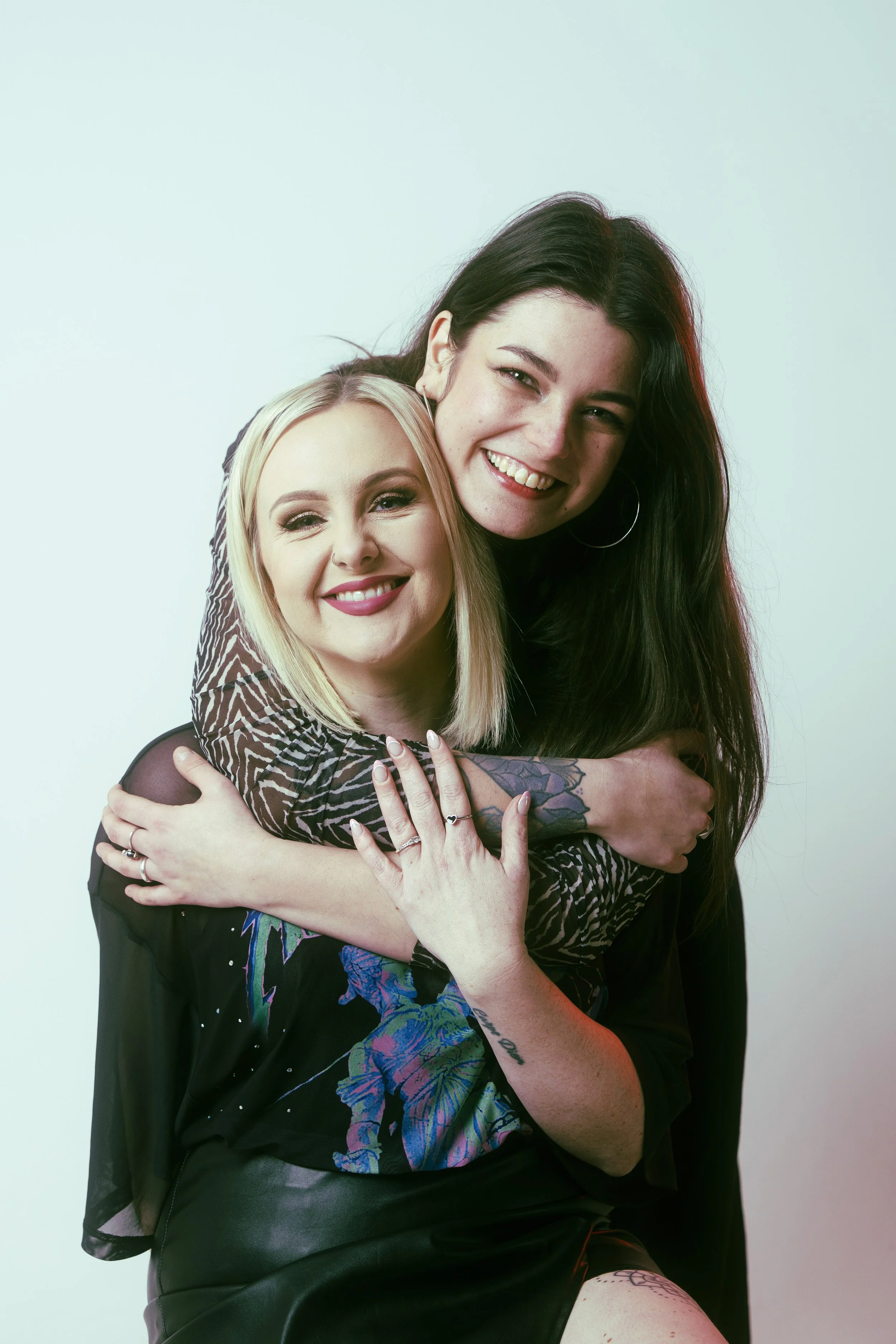
Dani Hewitt & Jess Dyer of The Fan GRRRLS Podcast © Alia Thomas | UNMUTED - www.aliathomas.com - do not use without permission.
Very true. Okay, just going back to the podcast, how did the idea come about? Why did you decide to start it?
D: I was listening to an episode of the Sappenin’ podcast with Sean Smith, and they were interviewing Josh Franceschi, the lead singer of You Me At Six, talking about the 10-year anniversary of their third album, Sinners Never Sleep. They talk about the recording process and the album itself is, in part, much heavier than their previous album, and he says that they were no longer seen as just a cute band for girls. And I, as a You Made Six fan girl, was like, what the fuck is wrong with being a band for girls? What do you mean? I'm a girl. I'm a fan. I was genuinely enraged, because it was hurtful. Now, my previous research, prior the PhD, was looking at the barriers and perceptions of women working in non-performance roles within the industry. So I have a keen interest in gender and gender roles and how gender plays out within the music industry, and I just thought, I can't believe you would say that, like, why? We've bought those first two albums. I've gone to those tours. I've stood in line at the meet & greets. I know how much time and money and emotion I've invested in this band, but you do the third album and it's like, “we're no longer seen as the cute band for girls.” I just thought, that’s so rude, so I sat with it for a little bit and I think I mentioned some stuff to Jess. She was on campus and I just couldn't get these things out of my head, so I literally burst into her teaching room and told her about it, and we just started talking about it and Jess had this perspective of how it related to different cultural theory. I was talking about how it related to the perceptions of women in the music industry as well and we thought that we needed to sit down, map this out, and came to the conclusion that we were going to go out and explore this. That's where the podcast came from. It happened when we were teaching cultural studies anyway, and that's where it came from - it's how we connected the dots.
But you know, I think there's enough self-awareness there too, because Josh went on to talk about the industry perception towards them as well, and I know when he repeats it a bit later on, he takes the gendered word out of it, so I don't think he said anything that was controversial in any way or that would deserve backlash. He said the truth. It was a turning point for that band because of the industry conditions, because of how the industry views women, because of how they view female fans, because of the role of women within these spaces, and they were great to have for the first two albums, but they obviously come to a point where if they didn't change their sound, they weren’t going to be seen as legitimate musicians within the industry as well, and it changed the perception. But he had enough self-awareness to say, “we were no longer seen as a cute band for girls”, and I think that speaks a lot. Just that one sentence speaks a lot about how women in industry are viewed, how fans are viewed, how men view themselves in relation to female fans as well. All these discussions of illegitimacy or authenticity are all sort of just rolled into that, and I think I genuinely was… enraged probably is the right term, but I was really upset from the perspective of a fan. In that moment, I wasn't a researcher. I just thought, wow, like you are literally my favourite band in the world. You've been the soundtrack to my adulthood, but that's not good enough, and it was that which led to this real awareness of how women are being underappreciated. They're being overlooked. Their labour is being used to the benefit of artists and to build these big names. I just saw like at a certain point, there are a number of artists that go, “okay, yeah, we want the guys now” and we could talk forever about maybe why that is, but the truth is, it is happening.
From your viewpoint, why is it that do you think that women aren't necessarily taken as seriously as much in general within music?
D: I think that goes back to what we were saying earlier about when it comes to defining the band. There's so many of these ideas about what a woman should be, or what a girl should be and the things that they should like, and its almost a ‘stay in your lane’ kind of thing as well. You're allowed to like Britney Spears. You're allowed to like One Direction and Harry Styles. You're allowed to like Taylor Swift, but don't think that what you like, means anything essentially.
J: I think there is also the aspect that they need fangirls to exist. We know for the emotional labour, financial labour to make the industry run. We know women are the main consumer globally now. We spend $30 trillion a year as consumers globally as women, and this is set to go up to $40 trillion by 2030! We are the highest consumers, but they need fangirls to exist, and groupies, especially groupies, because they need that free labour and they don't want to pay us for it. So if the industry can keep us attached to this word of fangirl (which it is positive when it starts becoming a self-identification for us women, which we love, we adore it), but it should not cancel out the work that should be paid. That is a crucial element and we're not talking about it enough, there are professionals who are going on social media, who are running these PR campaigns, but that is essentially what a load of fandoms do, and fangirls especially do that labour for free. When they're making merchandise, when they're running events that support an artist or a local scene, these roles should also be paid. So the industry does need the word to exist and by making it unserious, they kind of get women’s labour for free because they're gatekeeping us into one specific area and not allowing us more control within the industry.
So I think that's a crucial element and it's hard because that's the barrier we experience and fandom is one of the crucial ways that women professionally network and develop in the music industry. Fangirls start these fandom projects and then we start getting work experience but then we're kind of gatekept by the industry for free labour because we're unserious fangirls despite having so much cultural production and investment into the industry itself.
D: You just need to look at the numbers of like, say what's like the Eras Tour brought in for the global economy. How can you still not take Swifties seriously? They have such a collective cultural and economic power yet we'll say it's just Taylor Swift fans. It's how we view women. It's how we view pop music. It's how we view popular culture. It's how we view the performance of femininity and it's just misogyny repackaged, but for the things that you love.
I think something that kind of leads on slightly from that, not directed purely at women but it's just the whole general unaffordability of the music industry at the moment that seems to be growing and, hopefully peaking, but it just seems to be going on and on doesn't it?
D: There are a number of litigations that Ticketmaster are involved in currently and hopefully that will do something but I honestly don't know.
But it's not even solely the general show tickets, because you then have to pay for meet and greets to merely go and have a picture or shake hands with the artist that you know.
J: And then the outfits that you have to invest in to be seen as a legitimate fan.
That's it, and with Taylor Swift there's the friendship bracelets that people do for each other.
J: Plus then we're talking about accessing these concerts as if it was down the road. Most of these people are paying for flights and hotels and the UK is really lucky because we have a really good touring system. But some countries would get one city and fans would spend thousands of pounds to be able to attend it.
It's just becoming a bit exclusive isn't it, for the people that can afford it, which is a real shame.
J: This is also why we looked at the term ‘grrrl’ in our project, FanGRRRLS, because we’ve done a lot of research on this and it all kind of ended up saying the same thing, that literature based on fangirls focused on white middle-class women because it's becoming more and more exclusive, and it’s becoming quite attached to capitalism and hierarchy, especially as the industry begins to gatekeep the idea of fangirls. The industry knows they're going to continue to commodify fangirls and our interests, because we want it and we need it for self-expression and interest in community development, and the industry can see all the benefits it has for us, but the industry needs to make lot of money from us, and exclusivity is an easy choice. This means the idea of the ‘fangirl’ on the surface is seen as a certain type of demographic.
But we need to start having intersectional discussion about what it means to be a fangirl for those who may racially marginalised, from a certain class backgrow, who is gender non-conforming, or disabled, or who is plus-size… and we're talking about how these people take up space within these fangirl communities, and is that always accessible and respected? Is that always allowed? So, exclusivity is connected to intersectionality, reflecting on the responsibility of the industry, but also us within our community; how much stigma have we actually internalisd and are we challenging the misogynistic values within our own community?
D: You then add in that we have the experience economy where you have large corporations buying out all the front row tickets to put VIPs in there who are not even fans in the first place, and it's just a bizarre situation, like we've run out of stuff to buy so now we buy experiences. Now we gift experiences, and that does ultimately stop the people whose labour has got that artist to that point. They should be able to see that artist and I appreciate that it is a business at the end of the day, and that artist is a business and they are pulling in probably millions, and we are obviously talking in terms of the Taylor Swift's of the world here… but we'll see it on a lower level as well. There is a certain level of gatekeeping, the rising costs of the industry, and the fact that artists are not making money from their records in the same way that they were 20-30 years ago. So now the majority of income is coming from touring. It is coming from merch sales. There seems to be more of a push there and along with that they are going to want to exploit more and more of the fans.
Understandably. The community aspect is a very positive and important thing that comes out of fandom. It's not just the fact that people get a lot of pleasure out of the artist or whatever it is that they're a fan of, but actually, a lot of people do make friendships through fandoms. What would you say are other key things that come from these fandoms that are so positive for people?
D: I think you get identity building, don't you. I mean, a lot of the things that we are fans of happened in our formative years. They happened when we were pretty young. The things that I liked around aged 13-14, the bands that I got into then, I'm still obsessed with. In fact I just bought Jimmy Eat World tickets for the 25th anniversary of ‘Bleed American’ and I remember having that album and it was transformative. It reminds me of those times at 14, there were a lot of house parties going on, I was hanging out with my friends, who had older brothers who were in bands. I was a part of this community in this scene, and I just had this sense of belonging that I hadn't felt up until that time, where I found my people. That not only was a source of fandom but it influenced who I am today. It influenced the other people that I got to know. So I think as much as friendships, community, but identity too. I am who I am because of the things that I liked at a certain time in my life.
Absolutely, it makes total sense, and with that, nostalgia seems to be playing a big part in music at the moment. Of course everyone feels nostalgic over certain eras, whether that's because they lived through them, or they maybe missed out on them. For example, at the moment there’s a big trend of the early 2000s… So the interest of what we were probably into growing up as teenagers has come back around big time for ourselves and the younger generations. There are a lot of bands that are coming back around with anniversaries of albums from 15, 20+ years ago, so how do you think fandoms, or the way we fangirl, changes over time?
J: I think there's a couple of things. One is probably connected with domestic spaces because I think they're changing. I think we're seeing it evolve because as we all grow up, we're not growing up the same way as our mothers and our grandmothers grew up. We are empowering ourselves to stay connected to our interests and not going, “well I'm too old for this now”. I think that's one of the main ways of how it's going to evolve, and I would still be comfortable probably saying and being proud of my fandom interests, even if I was 40 or 50 years old, and I think there's consent and empowerment given to women as they grow up to stay connected and expressive of their interests but the capacity might change just because of our comfortability and our overall engagement with it.
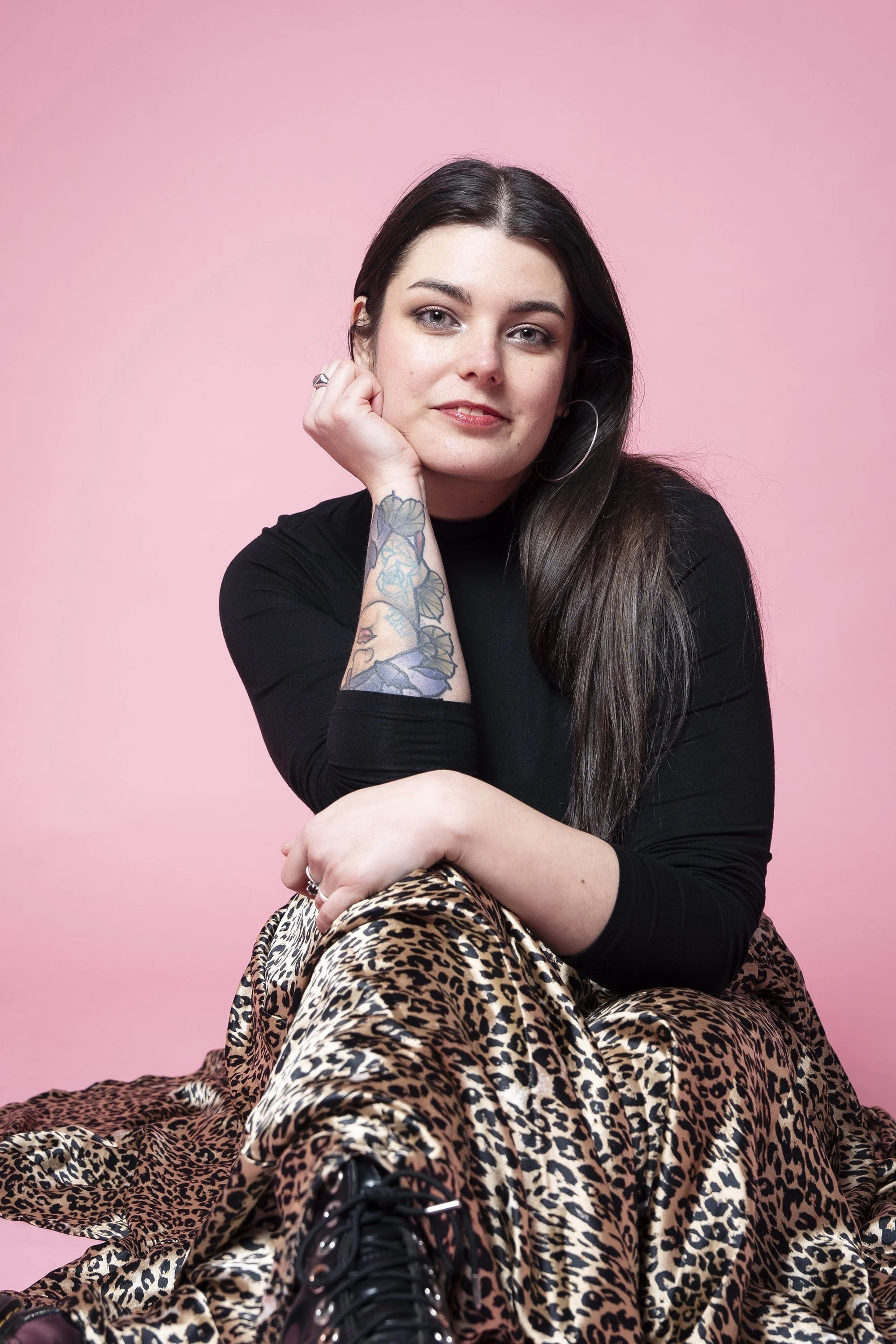
Jess Dyer of The Fan GRRRLS Podcast © Alia Thomas | UNMUTED - www.aliathomas.com - do not use without permission.
D: When we're younger, the fan spaces that we are a part of, where our fandom takes place, perhaps it is more in a live music venue, or it might be out with friends… My fandom took place in physical spaces - I went to regular gigs, I also read Kerrang! magazine and I had maybe Scuzz or Kerrang! on TV or something. Now that I’m older I'm not out every night of the week, I'm not out once a month, I'm out maybe once every six months, and that's if I can be bothered. So where I enact my fandom is actually taking place within a domestic space now. That typically is what happens to women as they get older because they do become caretakers. It’s the socially accepted role that a woman will take on, whether it's for care of the partner, care of children, or care for family members. So in terms of what's changing is that we no longer enact fandom in those other spaces like we used to, now it's more in a domestic space. Perhaps then these become like one-off kind of hallmark events, something to mark on the calendar, and there is a sense of, maybe bands are kind of figuring out that they've overlooked women, but also maybe not because they're not bothered about who turns up. But on the other side of things, this cultural trend of nostalgia feeds into a lot of different things. You can look at it from an economic point of view how nostalgia rises when we're not in a great economic position as a country, as a whole, so we think back to simple times, and we're also bringing theories of hauntology here, which is where we can't imagine our future anymore, so we hold on to things of the past. We want to return to what feels safe. We see this in lots of different cultural trends as well, even like at Christmas time on TikTok it was all about the 90s Christmas aesthetic, and I even bought a camcorder for Christmas. I wanted to buy into it, I miss my childhood.
J: On that, there's also the more capitalist sense like it's cheaper to reproduce things if a brand already exists. It's far cheaper to go “it's a big anniversary time, let's get a big tour out”.
D: And it's why we're not getting any new movies either. It's why we're only getting remakes of old movies, because they're tried and tested and the risk is almost too high to try something new, or to take a chance on something new. So, we get the push for anniversary tours, and the truth is they are doing well aren't they. I’m buying tickets to go see the bands that I probably didn't see the first time around.
J: But while we could critique this, it does open a conversation about developing interests for older women and moving them our domestic spaces. Typically if we said this 10 years ago, we would have seen men, older men, on anniversary tours, and now we've got Sugababes, we have Spice Girls, we have Girls Aloud. I do think it’s equally as important that we're allowing older women to re-enter these spaces because we change representation and re-invite older women into the fandom spaces which is going to re-configurate how we do event spaces, and what accessibility considerations we need, and how we protect their space and their safety. It's easy to say anniversary tours and repeating shows are bad, but also it’s introducing a whole new kind of touring industry that we haven't really seen before which could focus on older women. That would be the great future for fan girls.
Going back to the podcast, you're on a bit of a hiatus at the moment but are we to expect anything more to come?
D: I don't know, we just find ourselves in this weird position. Both Jess and I started pretty serious jobs at the same time whilst trying to add a PhD in, and then life on top of it. FanGRRRLS is so important and we do have things planned… It's evolving. I love doing the podcast but what I think was really good about the podcast in the beginning is that it was a space where we were learning and researching, and then we kind of felt we've started the research now, and at the moment our research is in two different places. I will eventually talk about fandom in my research, but I'm not there yet because I'm talking about music scenes and the de-industrialization of the South Wales valleys and its impact on masculine genders. I didn’t think I was going to be writing about that.
J: I think the other half is that we enjoyed this bit, like these live discussions because we're teachers, we're lecturers, that's what we enjoy doing, and the podcast was good to get those research ideas but the thing that's been really attractive to us is when we get to discuss them with audience members. So it's also been a matter of working out how we do that? We'd love to do more live podcasts, but we have to think of a way of doing it because we've talked about workshops, and at the end of the day we are lecturers.
D: Obviously I think you can tell from this chat that we haven't lost our passion, we haven't lost our enthusiasm. Our core values are the same and we want to talk about fandom. So, we’ll see. We will do something. We have some very good things in the pipeline that will turn into things, but it might just be a little bit longer, but they’re happening.
You mentioned earlier what was certainly a big challenge within your band career that led you out of that. Have there been any other experiences that you’ve found particularly challenging within music?
J: The big one for me was my body as a performer. It was a lot of comments, and touching, and even though I was underage, men trying to kiss you or grope you. It was very uncomfortable and really made me step back, but it wasn't until I was a lot older that I started to think about where the way I view my body stemmed from, and it was really sitting down and realising that it’s because all of these people thought they could have ownership of what you look like, just because you were a singer, which is ridiculous. It's never been that significant for me in other areas so I do like to help punk bands a lot. I like to get involved in a lot of punk events and do social media, and I do merchandise designing, and there's the other barrier I guess, which is how you take up space and how people let you take up space. It’s like having this attitude of “I'm going to have to act like a middle-aged white man just to get by” haha, and I think that has been the biggest learning curve for me is how I take up space and that I'm allowed to take up space despite men making me feel uncomfortable, even unsafe, to do so. That has been probably my biggest learning curve and barrier but like I said, there's a whole load of research on how we've learned to professionally develop and maneuver ourselves within careers and these are our creative industries, and not everyone looks at it as careers but that is what it is to us, so those things apply, and how we manage ourselves and how people talk to us… it’s kind of the wild west at the same time, so it’s even harder to manage those conventions I suppose.
D: My early experiences in the industry were really positive and especially when starting out, looking for opportunities, networking. I think I've always been able to get on with people really well and I had a lot of good experiences, and really great mentors, all men as well. I was really lucky in a lot of ways but the biggest challenge for me was the sexism that I experienced. The fact that I was a 20-something year old woman with long blonde hair and I was commonly referred to as a groupie, or only there because I wanted to get close to bands, not that I was serious and passionate about music and wanting to work with others and be a part of my scene. I'd gone from being part of the audience to wanting to work within the industry as well. I’ve not had great experiences when it comes to sexism in the double standards of working in the industry. It’s the entertainment industry after all. Sometimes people get drunk, sometimes you're doing that with colleagues, and I've certainly had an experience on tour where I've not felt safe by the company that I'm in, because I know the attitude that someone has that's part of the crew. When I'd voiced those concerns I’d been met with being told I'm being dramatic, I’m having an impact on his career, that I must be doing something for them to act inappropriately, that I need to be more careful because they have access to all the bands I want to work with… That really took the wind out of my sails. I came away from that experience with a lot of shame as well, and thinking that a lot of these things were my fault, and there was no ownership from the rest of the team that I was on. You know, this one person was making me feel very uncomfortable and very unsafe, and that lack of trust, I think, bred the shame that I came back with. It really did make me want to find almost a way completely out of the industry. Those perceptions of why I was there in the first place, because I'm “inauthentic” and I was just trying to use my feminine wiles on all the men in bands… I was none of those things. By the time I came out of uni I’d been attending gigs for 11 years, I was a part of that scene. I was part of making that scene. The double standard and the perception was a massive barrier. I also noticed that male colleagues of mine were getting introduced a lot quicker to the people they needed to know. That they were being invited to more meetings, that they were getting opportunities that I wasn't. It was taking them half the time to go up that ladder, so there were a lot of things that were going on. Now I can't speak to how the industry currently is, and I can only speak to my experiences and my genre of music as well, but it was a lot. It's why I started the the first organization that I did with someone else in Wales, called WOMEN - Women Of Music and Events Network. We set it up and it was an opportunity to network, for us to connect with mentors, for us to skill share, and for us to hear from women that had gone on tour and were now doing so much, becoming parents, being parents, and I was amazed because I came back off tour and I couldn't speak to the men about the sexism I'd experienced. I didn't have anyone to talk to, but I also didn't have good female role models either. So that's why we set up WOMEN. We did workshops and all sorts of things until around the pandemic, and all those experiences have really gone into, and are at the heart of, my professional practice as a lecturer, but also what comes through with FanGRRRLS is about highlighting women's stories. It’s about providing safe spaces. It is about connecting with others, and I think all those core values are both in projects that I do, in the research that I do, but also in academia.
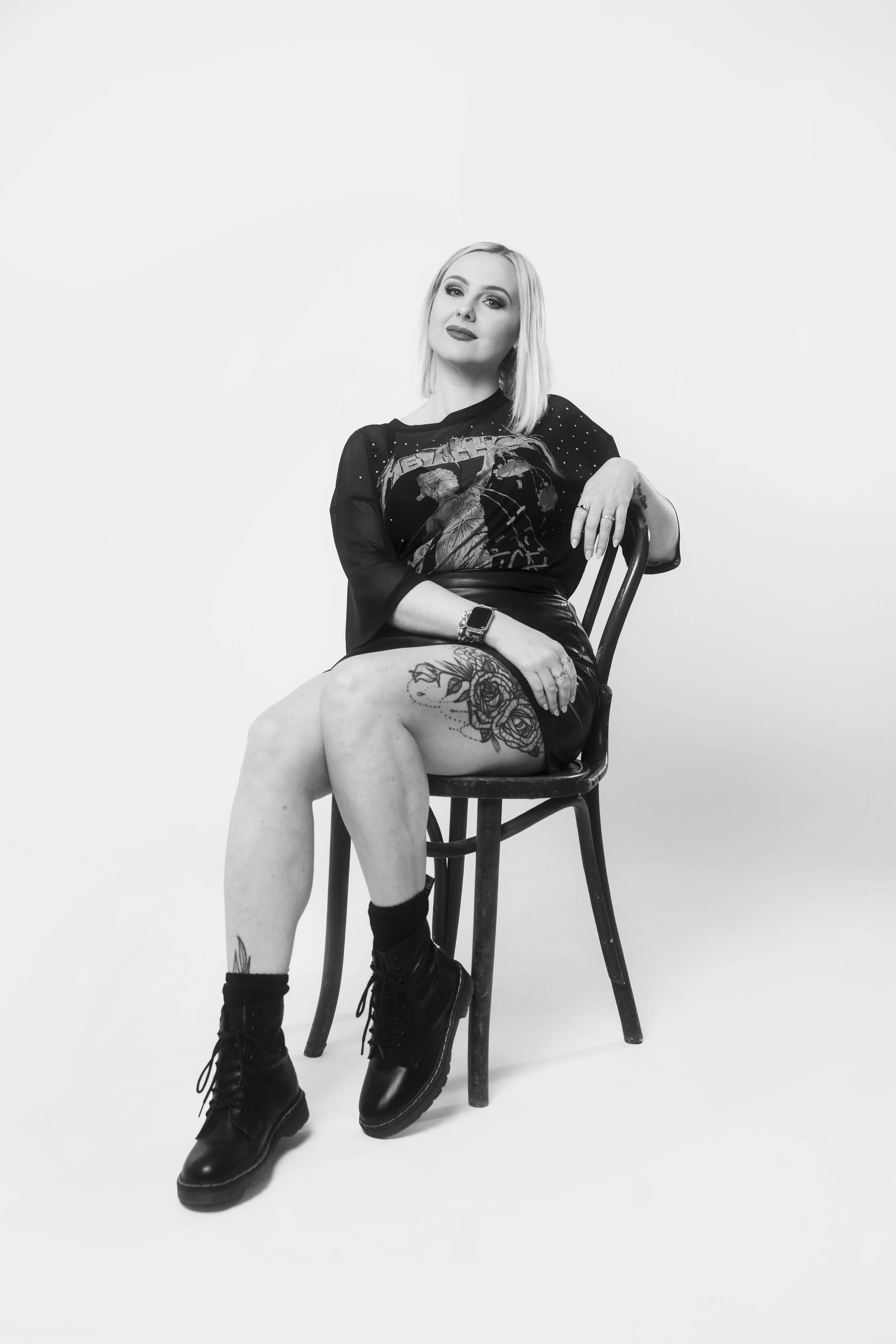
Dani Hewitt of The Fan GRRRLS Podcast © Alia Thomas | UNMUTED - www.aliathomas.com - do not use without permission.
So on the flip side, what do you feel has been like a highlight of your career?
D: I think I can tell you a defining moment of when I knew I was going to become a teacher. It was the young promoters network that I first started volunteering with, and then I became the volunteer coordinator. I had all these young people, trying to teach them how to do gigs and how to advance shows, a lot of what I do as a teacher now at BIMM, but I remember there was one volunteer, Lauren, and I say volunteer but she's a good mate of mine now, and I'd helped her with her personal statement for a UCAS application. I remember that she maybe posted on Twitter at the time that she had done her first night in halls, and I remember feeling such a sense of pride that I had been even just a small part of her story, and then it clicked… I think I'm supposed to be a teacher. Then this last December we had our graduation ceremony at BIMM, and one of the students, Georgie, that studied events management and performance. They had been a student that I’d had when they were in our FE college, so I had been with them for the whole five years of their time at BIMM, and I'd been their project supervisor for their dissertation, and watching her graduate as well was just amazing. The highlights of my career have really been the times when I’ve been able to go, “these are the things that I know, and this is how I want to support you, and so how do I get you to take one step further towards making your goals a reality.” Seeing them find their path, it means everything to me.
J: For me it’s just the people you meet, I think. Every time you meet someone new, you change for the better. So when I think about when I first entered this industry, I was really young and I'm going to change anyway, but the way I thought about the world and the way I thought about myself, and the way I thought about people and the things I wanted to do, and what meant the most to me, has been enhanced and enriched by every single person I meet, because they have such different perspectives and ways of viewing things that I think I have benefited greatly from.
Both really lovely points. Now at the end of each podcast episode, you ask each other what you’re fangirling about that week. So, what are you currently fangirling over?
J: Don broco, their new song ‘Nightmare Tripping’, and I’m waiting for that album basically. I would say Florence And The Machine, she's on tour, but I had to sell my stupid ticket so I'm kind of ignoring anything to do with her because I'm so heartbroken haha so yes, Don Broco's new album's coming out. That's going to be really cool.
D: Mine does change a lot, and it changes at your capacity, but generally, I'm feeling quite disconnected to the things that I love and hold interest to at the moment. That is okay, there is room for that, but I will echo that since the new semester has started, I don't have any brain space to think about the things that I like. If you had asked me a month ago, I was still very much in the Stranger Things fandom which I watched as soon as I opened my eyes on Boxing Day. Then I stayed up on New Year's Eve to watch the final as soon as it was released. Me and my cousin were on Snapchat discussing it, and if she didn't have three daughters in bed and I didn't know that I was absolutely going to scream at some point of it we would have been in the same house, but instead we just discussed over Snapchat but even then there was a real sense of being a part of a community that I'd not really been a part of before. I don't tend to get into things when there's a big hype around them, but I did get into Stranger Things on season two which is the quickest I've ever gotten into anything like that. It was just a really new experience of being part of that community and engaging with the TikToks and engaging with threads, and I absolutely loved it. So I have massively fangirled recently over Stranger Things.
If we're thinking about the industry in five to ten years time, what do you hope that things look like? Whether that be for fandoms, fangirls or others.
D: No streaming… No, please, less streaming! Less digital. I feel like it will, but I'm surprised it hasn't already. I guess I would want it to be more inclusive. I would want to see a larger percentage of women, especially past a certain age, taking up space and taking up roles, but that means I also hope that the landscape has changed. I really do hope that Taylor Swift's lawsuit against Ticketmaster pays off. I mean there is a monopoly there with Livenation and Ticketmaster, and I think if that was better managed, perhaps it allows for new opportunities. Grassroots have massively changed. There's a lot of things, a lot of moving pieces, but I would want to see more investment in our grassroots venues and less conglomerates, but really, more women and other genders taking up space, especially in those senior roles.
J: Mine would be somewhat similar. It would be collaboration with independent business and just like I said at the beginning, male audience members taking ownership and responsibility for their behavior towards women in the industry. It's equally just as important for any gender, any person within the industry, to take ownership of where they're directing their fandom. It's all great us talking about fandom but it's constantly focused on these mass capitalist ideals and phenomenons. If we could actually change our perspective and put this work, this labour into independent artists, independent grassroots venues, independent designers, record labels, merchandise, we'd have a much healthier industry. So ultimately, shared responsibility I suppose.
Lastly, to the girls or women that are aspiring to work in the music industry, in whatever capacity that may be… what would your words of wisdom be to them?
D: Don't wait for permission. Pull up a chair, take up space and just make shit happen. I think that message gets lost because that's what the industry is. No one is going to invite you in. Everyone is pretty self-sufficient, self-sustaining, so pull up a chair, make space for yourself and just do it. There are a lot of great people. There are a lot of really dedicated, passionate people, about music, in all different types of genres and all different roles within the industry. Education and skill development is really important. Look for ways that you can develop those skills and just don't be afraid to take up space no-one in this industry is invited in. Even if it seems like they are, they aren't. So pull up a chair, sit down and do it.
J: Just be yourself because somebody wants to invest in it, because they find that relatable, and I think that applies to everything. I initially thought that would probably be a performer 's perspective, like finding their audience and who wants to listen to their music, but I think that's for anybody. Anyone who's starting events, anybody who wants to promote, anyone who wants to do PR campaigns. If you can have a good idea of what your identity is, what your core values are, how you perceive yourself in the world, you're gonna find the right people for you. They're just going to have so much interest and love for exactly who you are and then the good things will generate.
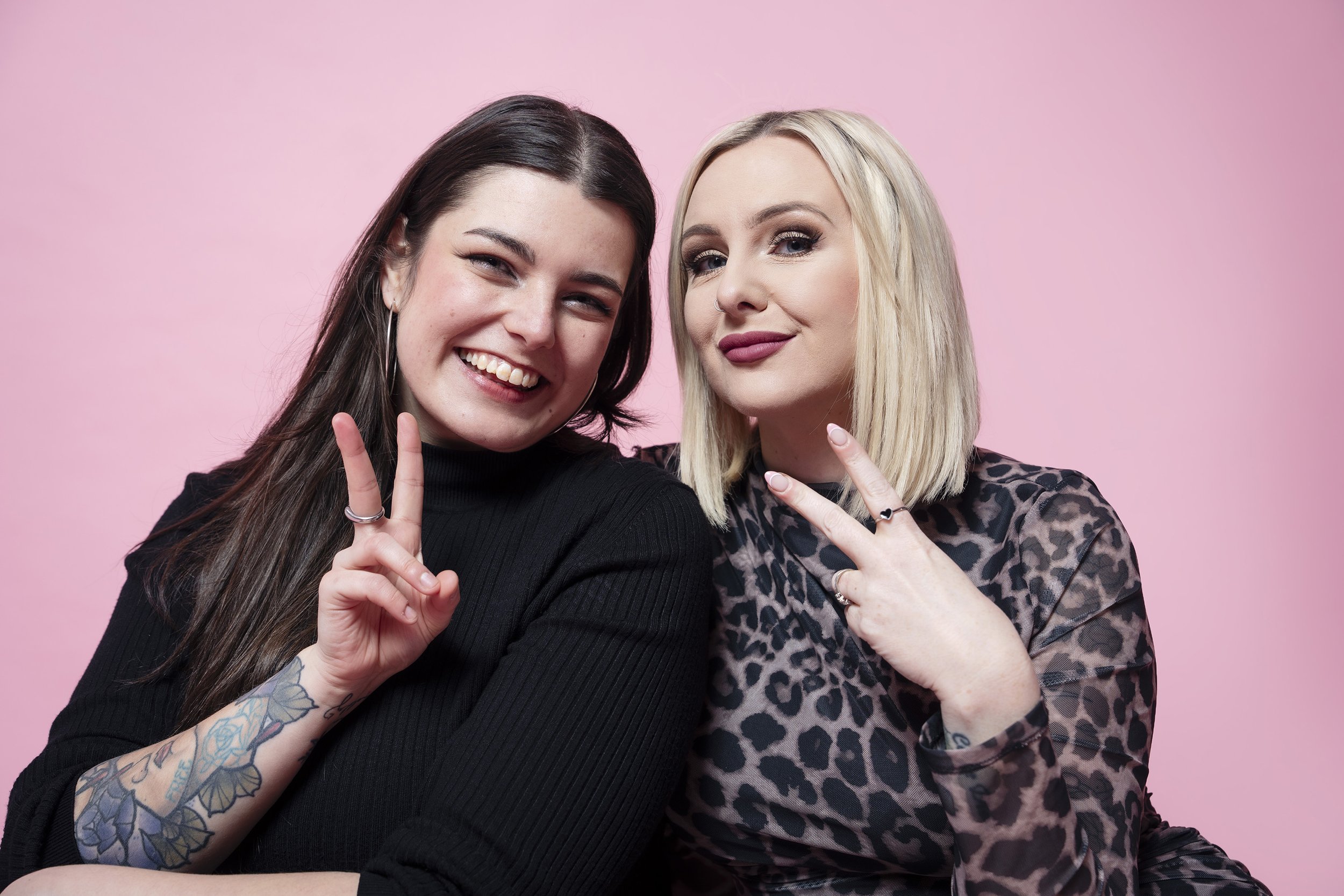
Jess Dyer & Dani Hewitt of The Fan GRRRLS Podcast © Alia Thomas | UNMUTED - www.aliathomas.com - do not use without permission.
Thank you so much to Jess and Dani for taking part in this project. I truly loved chatting with the girls about all things fandoms. You can follow Jess and Dani via the links below and of course, do take a listen to their podcast on your chosen streaming platform! There’s plenty of episodes to listen to and lots of interesting discussions they have together on the subject of fandoms. Dani has also recently launched her podcast South Wales Emo Scene based on her PhD research that may be of interest too.
Dani: @daniihewitt
Jess: @jessjdyer
The Fan GRRRLS Podcast: @fan.grrrls | Listen here!
South Wales Emo Scene: @southwalesemoscene
I’m very grateful to be able to have made this project a reality over the last couple of years. This is a fully self-funded project, and due to the costs to do these features I will soon be taking a short break from this written format, but I have something planned to continue the series in a different way. So, if you want to hear from anyone in particular, or if you’d like to be involved in UNMUTED, please do let me know via email or the comments!