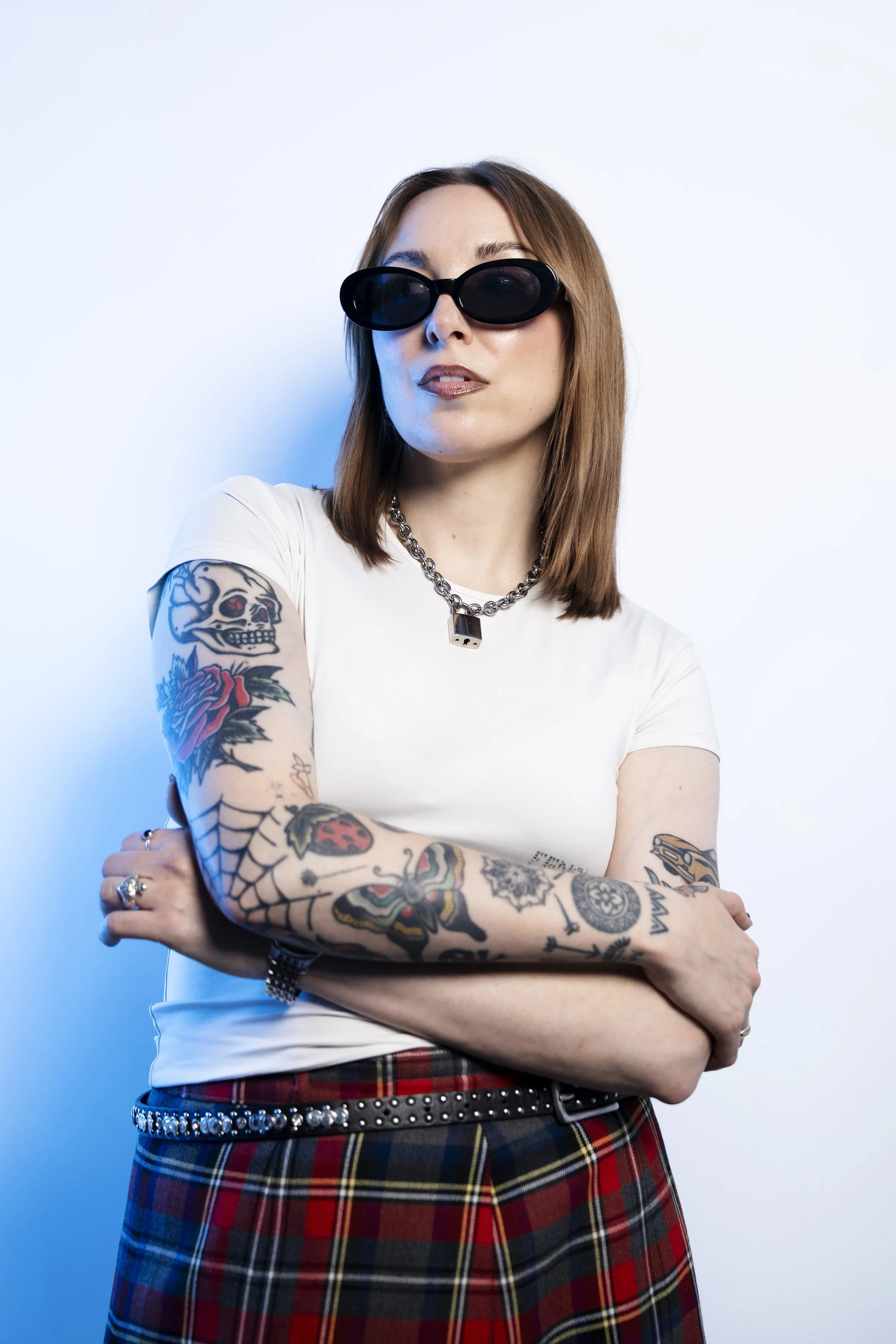
Kitty Cowell has been working in the music industry for many years, covering a lot of ground as not only a musician herself, but as a fashion and music content creator, and stylist to some of our favourite alternative music stars, and more! In this conversation we deep dive into many aspects of the industry that will be particularly helpful to musicians and artists, as well as aspiring music creatives. We talk a lot about what it is to be a stylist and content creator, and how your visual brand, including your styling, is such an important part of what can help you succeed as artists. So without further ado, let’s get into it.
Just a quick note; if you’d prefer to watch/listen to this conversation, you can do here on YouTube - thanks for your support with UNMUTED!
You have many roles, including fashion stylist, content creator, and presenter - you do all sorts, but where did it all start for you?
Okay, I went to uni to study fashion design and it was the MySpace era (early 00s/2010s) and I was making music for fun. I took a year out because I wanted to go and study fashion, but I hadn't got a portfolio as I hadn't done textiles at school. Originally I was going to do art at uni. So I took a year out to build a portfolio. I was making fashion garments and taking pictures, using my friends as models, so I guess that was the beginning of my styling really. We did this, end of year show at school, literally to fund my friend's gap year. She was going to do something amazing in Africa, building a school, so it was for a good cause and we basically put on this show. This was like my dream when I was younger. It was like a music/fashion show. I customised and recycled loads of clothes. We'd got loads of donations from people, and I got a bunch of stuff that I had, or I went to charity shops, and I was customising clothes to make this little collection. My friends in school then modelled it, and then everybody who was a musician performed. So we had bands and singers play. I had started writing poetry, which then became lyrics, because I’m dyslexic and poetry and art were the only things I was really good at basically. So I performed too. I hate calling myself a rapper, but that's what I used to do, but it was more like The Streets.
And then I went on my first girls trip holiday to Greece and my friends would get drunk and make me freestyle, and we'd met a bunch of French guys and one of them was a DJ who was DJing there, and he thought what I was doing was really cool. Anyway, long story short, my gap year consisted of me going to Paris, and recording music. Loads of electronic music. So it was very much like The Streets. So it started with that, and I was propelled into this, from the Cotswolds where I grew up. We'd met these people on holiday and it was like a DJ, an actor, a presenter. They were really famous in Paris, and we had no idea. So suddenly we were out there, recording music with this DJ and producer. Fast forward, I came back and I eventually went to uni to study fashion design. I had this music, so I put it on MySpace, and I decided to put on some shows.
I went to Manchester and then I changed to Newport, or Caerleon was my university campus, which was beautiful, on the outskirts of Newport, South Wales. They had a fashion degree, so I decided to change there because it was more linked to the industry and more creative. I love Manchester, but the course felt very like, you're going to work in Topshop. It didn't feel very artistic and creative. So I changed, and it felt really creative. They're really well known for photography and graphic design as well, so you had this really good collaboration with people. And TJ's, which was a really famous venue back then in Newport, where I started to put on shows. I don't know, MySpace just made us feel like we could do everything. I honestly, I don't understand why or how, but I did really well. I wanted to see all these bands perform that I’d see on MySpace and none of them are coming to South Wales, and I wanted to perform like proper shows, you know? So I started to put on these nights in TJ's.
I had a lot of bands play, but there was a band called Colon Open Bracket, :( which looks like a sad face. They kind of changed my life because they came and played, and I met all these people through them, and those people started to take me on tour. So I was studying fashion design and then I was offered to go on a UK tour with Colon Open Bracket, but that meant I couldn’t start my third year if I take the tour. So I froze my third year and I went on tour and I had so much fun. It was crazy. They were being managed by Enter Shikari's management, and that's really where it all started, in South Wales. When I came back, I was on a TV show for a music festival thing, where I got into the finals, but I didn't win. But then my music and my face was kind of used in adverts for the next series, which helped me gain an audience on socials. I started a group then, so I wasn't a solo artist, and that blew up overnight on MySpace. We were then touring with Lady Sovereign and Example and people like that. So although I'm a little “greebo” at heart, I had kind of put myself into this other scene of electronic, grime, and that kind of stuff. There was always an element of rock in the music that I was making, with my solo stuff anyway.
But the group didn't work out, so I went back to being on my own as a musician. I decided to study music instead of going back and finishing my fashion degree. I just thought I had this platform, and what did I want to do with it? So I went to the British Academy of New Music in East London, which is where Ed Sheeran and Rita Ora went. It was like an X Factor style audition to get in. It was crazy. The music I made was just very bizarre - it was very niche, kind of like MIA vibes. I studied there for a year. So that put me back, and I was traveling between South Wales and London then because it's an academy, not a university. So you had funding for travel, but not to live. So it was very much like touring because a group of us would get hotel rooms together, and there'd be like three of us in a hotel room and we'd come and do a couple of two to three days studying, and then we'd go back to wherever we were from. Some people were from London, but they took people from all over the country. So that was an artist development course, and that was fantastic. It was breaking down everything from songwriting, musicianship, to branding and everything else that goes along with it, marketing, etc. And I came out like top of the class, and had the Guardian write a really lovely article about me being the next big thing, so I thought I had to obviously go all in. So I moved to London and got a job in retail, in Size, the sneaker store, and another job managing a concession in Topshop. On the side of all of this, I was doing music. So I'd been picked up by a management company that was helping develop me. And I was being put in the studio with big producers and sometimes co-songwriters. That was interesting, and I'm someone who enjoys learning, but I was a songwriter. So I did find that a bit hard.
Anyway, the long and short of it was that during that period of time, my Dad's very clever. He said that I should start a blog. He was very tuned in. So I started a fashion blog and I was working in fashion retail, and the job that I did have for a bit at Topshop was actually incredible because it was a small brand. I managed the concession and I was also one of their models. So I was like one of the faces of the brand. They'd pay me on top to model for campaigns, and it was quite flexible.
So, yeah, I was doing music on the side, but some things transpired, and I'd done it at this point for a long time. I wanted to put out music, but management wanted to keep developing me, but I felt like they weren't doing enough to develop me. I felt like I was being held back quite a lot, and some of the producers they put me with were amazing. We'd written a song that was honestly really good, and I still say that to this day. We wanted to put it out. I thought we could just put the song up, and now I get it because I work in the industry, but the MySpace era was different. So we ignored my management and we pulled our money together. We made a music video, and that's where I really started styling because I was styling myself for it and other people. We had actors and dancers. We had hand-painted sneakers, especially for the shoot. We didn't have lots of money. We just gathered our resources and friends. Long and short of it was that someone who was filming it completely screwed us over, took our money, never delivered the video, wouldn't even give us the raw footage, and it started to just destroy my confidence in the music industry. Even though people did believe in that single, and it got played on Kiss radio. In that time where we shot the music video, I had sub let a room off a friend who was a photographer, and he was living with another photographer, and they had a makeup artist friend who would come and visit. She didn't live in London, so to do work she would stay with us. So I started the blog, and because I had an online presence, people would often ask where I got my clothes from. I was savvy in the sense of, I was getting a lot of gifting back then, and I'd get a photographer to shoot me in the clothes, then I give the photos to the brand, and then they would post about my music. You know, you go on their website, and my face would be there, and then it'd say “click here to listen to Kitty’s music“ on whatever it was on back then. So I had all these resources, and then my friends would help. They would take pictures of me, and she’d do my makeup sometimes, and they thought I should get into styling because I was doing all this styling work on myself and previously on the music video.
So the photographer that we were living with was incredible, and he was getting models sent to the house to do test shoot days. So he said I should style it. We were getting paid fuck all but he said he got a little bit of money to cover us for the day, pay for everybody to eat basically, and where we were living together it was like putting a bit of money in the kitty to turn on the heating or for bills. During my blogging days I was reaching out to those brands that gifted me, asking if I could get items for the shoots I was doing, and then I started to learn about fashion PR agencies. I was starting to be invited to them because I was in London as a musician, and they were gifting me, and because of that, everybody in the music industry that knew me found out that I worked in fashion too, and as soon as people heard that I was styling shoots, they started to offer me music styling. So I very quickly started doing artist styling and music videos, because I guess the people that had seen me do my own stuff thought I could do the same for their artists. That is the story of how I got into styling.
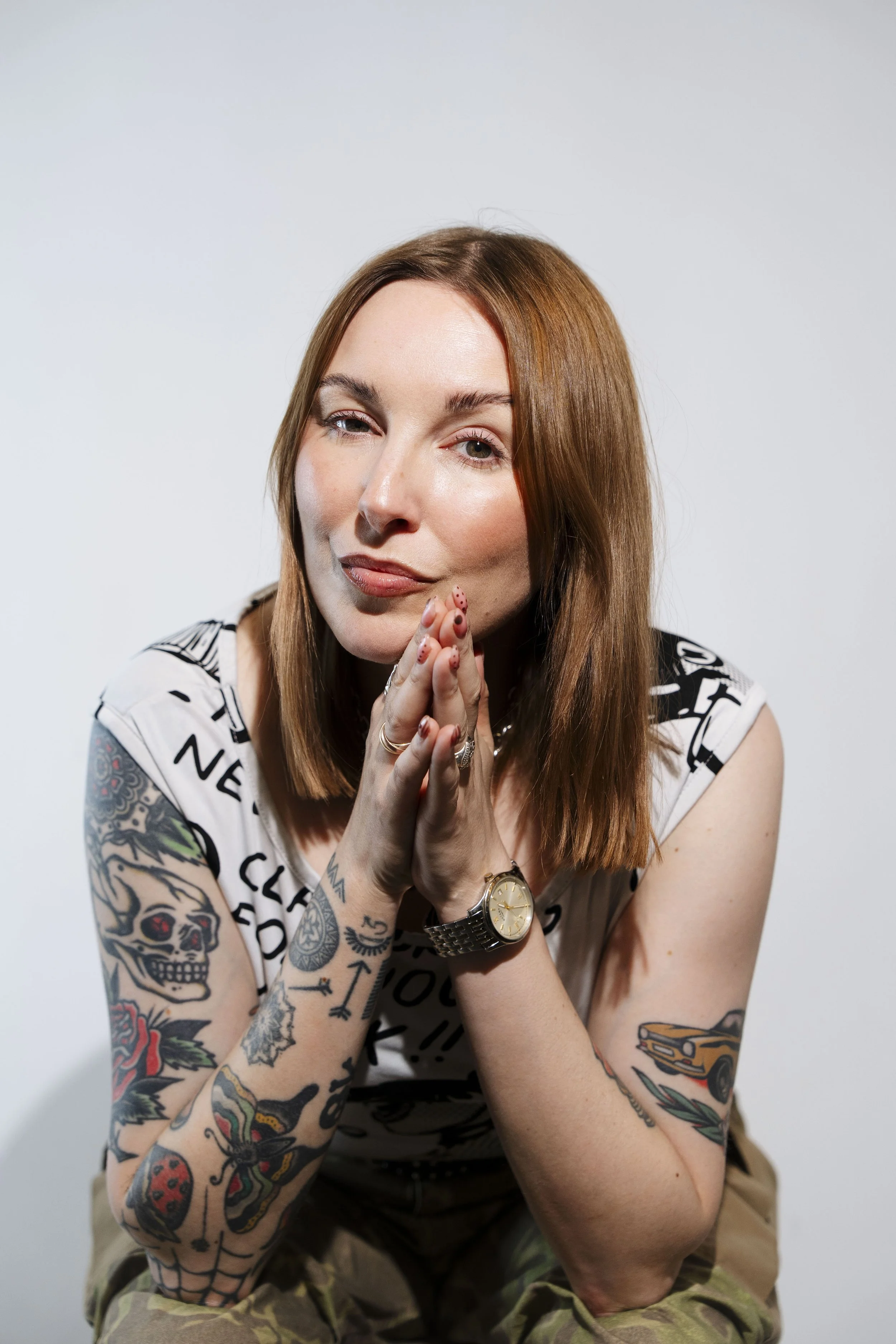
Kitty Cowell, UNMUTED, 2026 © Alia Thomas | www.aliathomas.com | Please do not use without permission or share without credit.
So it sounds like styling wasn’t the route that you were initially wanting to go through into fashion?
It kind of, again, was one of those things that just happened almost. Both my parents had worked in fashion. My mom had been a fashion designer in the 80s and 90s, and after having me she got quite ill and had to stop designing, but they had been in fashion, and I was very young when she stopped doing that, and because of that, obviously, she would talk about it, and I learned stuff about the industry. My dad was a sales agent in fashion. When [my Mum] was doing it, they worked together, but my dad also did it for lots of other companies, and he would take me sometimes to catwalk shows or trade events where all the fashion houses show there. So I always had an insight into the industry, and my parents still had friends that worked in it. So sometimes, I'd come to London with my Dad and go to things, meet them, and that's why I wanted to do fashion design, because I'd seen the industry. The only things I was really good at were like creative pursuits. So art was my favourite thing. My entire focus at school was art really.
I'd not seen any stylists in the industry though. I knew that sales existed, and marketing and PR and design. Working in magazines was always in the back of my head in some respect, but I didn't fully understand the world of styling. So I very much did slip into it. I guess you always knew celebrities had stylists, but I just didn't ever see behind the scenes of it.
It makes sense that you went into fashion, if both your parents were in that world and you grew up being within it as well. Clearly you had a real interest in fashion as it was and had an eye for it, but not necessarily knowing that it could lead you that way, it’s nice that you sort of fell into it with styling.
Yeah, exactly, and to caveat that neither of my parents were working anymore when I actually was at the adult age to get into the industry. The first job that I ever did was working backstage, dressing, which was an insight into styling at The Clothes Show Live. Then I did some jobs at Fashion Week when I first moved to London. So that was my little bit of help, but it's not like I had people working in the industry to then help me more past that. So I definitely have privilege in the respect of knowledge and an insight into the industry, but the rest of it was very much working it out myself. But being able to go back to my parents and be like, “this is happening, what do I do?” You know, that the advice was definitely very helpful.
I’m sure it was. You've been in the industry for a while now, and you’ve worked with a lot of bands over your time, including the likes of Enter Shikari and Native James. How much power do you think styling and visual identity has in shaping an artist in their career?
Massive, and I think because of the pop industry, there's this negative connotation of having a stylist. However, most bands and artists know that it’s so helpful having somebody to help them with that when they're making music. It’s a weight off their shoulders having someone else who can help with that. It's always a partnership, but it's somebody else involved in the same way that you partner off with somebody to take photos or create the video. You have an idea that you collaborate on with them, and it’s exactly the same with the styling.
It makes a big difference because also, what I do is not just putting clothes on people, it’s building brand relationships, which they then might use the artists in a campaign, and then the artist gets funding from that, so it's way more than what people think it is, in my opinion, and the identity, like you say, and how important that is to an artist is is life changing. The amount of people in the music industry, whether it's editors of magazines, record label executives, that will say, if something is put on their desk, and it looks sick, they’re way more intrigued to open it, listen to it, pay attention to it than if it didn’t… It's as simple as that.
It’s interesting to hear that having a stylist can come with negativity, when it’s so clear from what you’ve said that style is crucial in the industry. So when you're working with artists on their styling, you said it's a partnership. So you must have a discussion about what they want, but what do you take into consideration when it comes to their styling?
When I'm styling artists it’s very much about bringing out their personality and their vision in the styling. There's kind of two main routes that people go down. Let's say we're talking about a press shoot. It's either like, as an artist, they have a persona that they embody as an artist, and that has a certain stylistic route, or, is very personal, and they, in that respect, want to be the best version of their authentic self. That's two different styling routes.
So if it's the personal route, if it's the authentic self, then I go in and want to learn as much about that person. I want to know what music they listen to outside of the music they make. I want to know who visually they aspire to look like, or whose style they admire, movies they listen to, what brands they like, what brands they hate, the parts of their body they want to show off and the parts of the body they don't want to show off. The things that irritate them in terms of fabrics, that kind of stuff, and the colours that they like, or hate. Sometimes, people don't know all the answers to those questions, but I will literally interview them, ask these questions to try and draw stuff out of them, and if they're not sure, I’ll ask leading questions, like, “have you worn this before? How did that feel?” We then get to the point of trying stuff, you know. So I’ll say we’ll try a bunch of colours, see which ones they feel good in, and I can tell them which ones look good. Then we’ll try some styles, and I’ll ask them what fits they like and don’t like, slim or baggy, and maybe try some different things. It’s a lot of trial and error.
But if you're going down the other route, and it's more that we have a persona, that’s quite fun. It’s not necessarily easier, because there's so much work with that to get that right, but in a way, it eliminates some things but you’ve still got to make sure that it's flattering, it fits in the right way or whatever. Let's say that a band only wear suits, I’ll have to decide what colour. Are we going white? Are we going red? Do you want a slim fit suit? There's so many suits out there! So there's always a million things that you have to whittle it down to. But it's all about drawing out the vision, and also making sure people feel good. The most important thing for me is making sure people feel comfortable in what they're wearing. Nothing matters more to me, and I think that is why I've worked with so many artists, because I've been one and I've also modelled a lot. I have experience and being on both sides, and I just try my hardest to make sure that people feel comfortable in what we're doing.
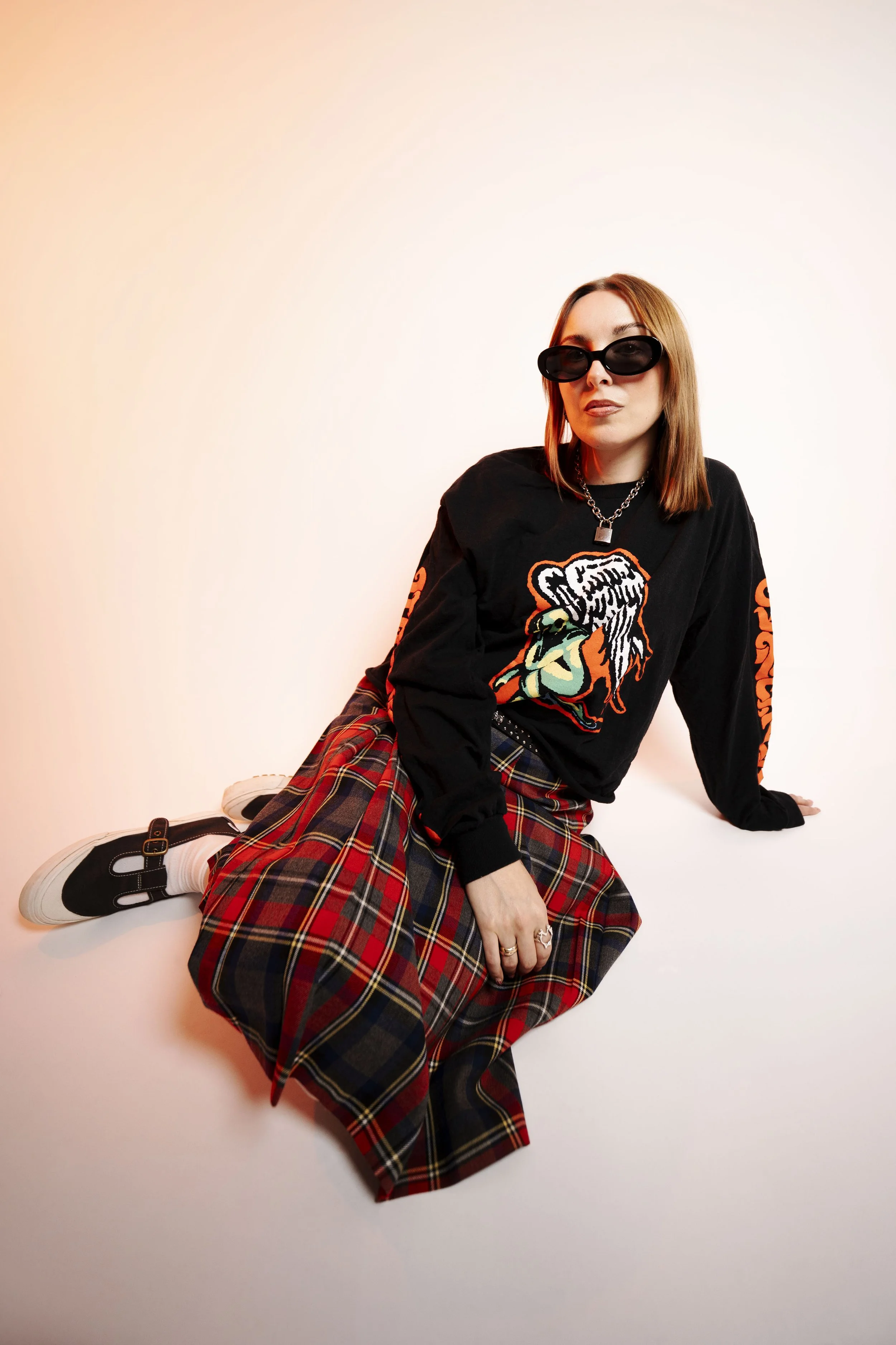
Kitty Cowell, UNMUTED, 2026 © Alia Thomas | www.aliathomas.com | Please do not use without permission or share without credit.
It’s well known that you’ve worked with a lot of male artists in the scene. Do you work with many women on styling too?
I have done lots of both, but I think quite early on, I was working with grime artists, rap artists, and then DJs, and I got really niched into working with male DJs, a lot, and this was for some reason, because of that world is a lot of guys. But on the side, outside of music, I was working with models, and styling women all the time for editorials for magazines. I worked at Notion magazine for two and a half years as their contributing fashion features editor, and I did work with a lot of musicians there, but I also did editorial styling for so many magazines, freelance, like Highsnobiety Magazine, Wonderland, etc. And especially the Wonderland type stuff, the fashion magazines, I was styling female models all the time. But I was generally known as the streetwear girl, sportswear girl. So when I was working with women, although I did a bunch of like sort of high fashion girly stuff, too, my niche that I would get picked for more was tomboy shoots, putting women in streetwear. That was blowing up at that time. So yes, I did work with a lot of girls, but like as musicians, less so. I have worked with lots of female DJs, singers, and bands with women in over the years, but the bands that have been more consistent are like Enter Shikari, for example.
I do love working with women, but again I really care about making them feel comfortable, because in the industry there's so many male opinions and eyes on women in the industry, and although I can do red carpet and full on girly ball gowns, etc, I guess I lean more towards working with people more in the alternative and streetwear scene. That is more my thing. I had to do an E-commerce job before for men's suiting, and that's fine, but it's not my expertise. And the stuff we were talking about, thinking about the fabrics and so on… The little details of the different parts of these industries are so intense. You have to know so much about suiting, to do suiting. I was like, I've been in this industry for 13 years and I'm learning all this new stuff on the street today, you know?
It seems there’s always so much to learn, however long you’ve been doing something. Is there a different way of working within the styling realm with women and with men?
Yeah, there are different things you have to think about. With women, if it's model shoots especially, but even if I was doing an artist shoot, we'd probably have this conversation, I’m turning up with bras, pants, and you have to think about different skin tones for skin coloured underwear, and different shapes. You're mostly turning up with the basics, because they just have to be comfortable and cover their parts, is the best way I can put it. So nipple covers are in my kit at all times, stick on bras, and underwear of different sizes and different colours. I don't do a lot of Ecom, but I have done in the past, and you need that stuff all the time for Ecom. But for campaigns as well, on set there might be items where it's slightly see through, or you need something that's strapless, but they still need support. So you have to think about that stuff. I've always got all these socks for women and men in my kit. For men you really just have to think about a lot of different kinds of socks, because a lot of campaigns and editorials, guys turn up, and they'll have a shit pair of socks, and you just need different colours to go with different outfits. Of course, with women, depending on the kind of shoot, then I might have to have hosiery. It will be more like pop socks, or tights. So in that respect, the nitty gritty details, you have to think about different things when working with women. With women and non-binary people, I suppose, but also with men at the same time, you have these conversations, my questions at first would be, “how do you want to represent your body? Do you like covering up? Do you like showing some skin?” That kind of thing, and of course, I do have that conversation with men too, and the amount of times I'm asking stuff, like, “how do you feel about a bit of a short t shirt? Do you want to get those abs out? Do you want to get that stomach out?” That is also, you know, a unisex question, but it is more something I think about immediately with women and non binary people.
So yes, the idea in my head is to start with how am I making people feel comfortable. With men I generally start with, what do you hate wearing? Some of them know everything about fashion, some of them know nothing, so it’s easiest to starting with finding out what they’re never going to wear.
Say you've got a press shoot or a music video, whichever you would prefer to choose, as maybe it differs. How would your day go on those shoots, and what’s the process like leading up to a shoot?
Okay, I feel like it's important to talk about what goes into a shoot before it happens, because you don't realise how much work goes into before, and it's a lot. I actually have a music video coming up in a few weeks, and the the band had an idea of what they wanted to do, so I have to find out what is the theme? What is the idea? What was the concept of the shoot? Are there specific colours involved? And so at that point, then they came back to me, and at first they don’t know, and I kind of pressed them on because we don't actually have that much time. I think that's a big thing that people need to realise is that a stylist has other jobs on that you have to consider. This sounds ridiculous to keep saying, but it's still true, that since Covid, or even post-Brexit, the lead time on getting items is long. You’re trying to get samples in but because you don't know where they're coming from, things are coming from all over, it can take time. I'm contacting an agency, a PR company, a brand based in London, but their stock isn't always based in London. Especially with jobs like that, because you need different sizing. It's not just model sizes, right? So I do need a lot of lead time in order to make that happen. But the first thing is talking to the artists themselves and gauging the vibe, then I would start to make a mood board. And I initially start to make that on Pinterest, because it’s super quick and easy. I can get a vibe, I'll start sending it to the artist and asking what their thoughts are, and asking if they have any images I can add to it.
More often than not, people don't know where to start, and they sort of just expect me to like pull out some ideas. So I'll get any little bits of information I can get, even if it's like the colour blue. If it's an artist I’ve worked with before then generally I know what they like, and I can pull in from past experience. If it's a new artist I haven't worked with before, I'll go to their social media, I'll look at any visuals I can see, and I'll ask them, “do you still want to go down this kind of route? Is this still a vibe that you're into?” And then I'll start a Pinterest board. So off the back of that, once they kind of approved that, I'll immediately start reaching out to brands, agencies, because I know the lead time, and I'm just going to need to start the conversation. I might not have all the facts yet, but I can say I have a shoot with this artist on this day, here’s the initial mood board. So then they start the conversation and say yes, we want to loan or gift this brand, to this brand or whatever. Or I move on, and I start speaking to other people, because it's not always a yes. It comes down to if it's a PR agency, or actually, this is the same for everything, either a fashion brand has a PR agency they work with, or an internal PR, and they have a strict guideline of the kind of people they want to work with that year, or that season, and that can be for different reasons. It might be that one season they've got a big budget and they've decided to lean more into, like music, and celebrity and that kind of thing. Or it might be that they've got a really strict budget for that season, for some reason, and they're doing less of that. So it's not always that like, that brand is a ‘no' forever, and it might be that that artist is doing something that is relevant to that brand.
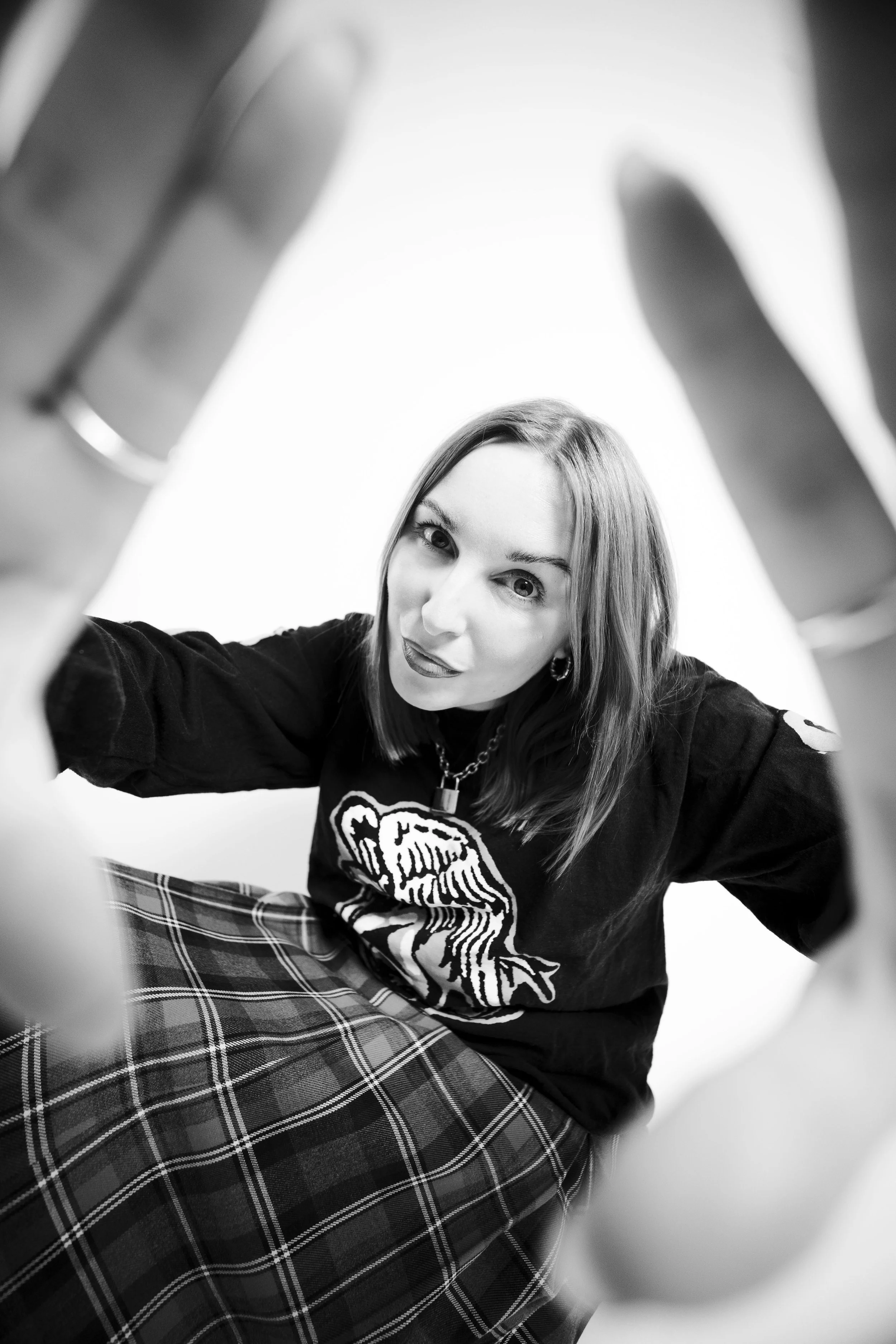
Kitty Cowell, UNMUTED, 2026 © Alia Thomas | www.aliathomas.com | Please do not use without permission or share without credit.
They might be performing at a festival that the brand are sponsoring, or doing something there. You know what I mean? So there's so many elements that come into whether they will say yes or no. Once I start those conversations, and I start to then get feedback, they'll send me look books, or I'll go into the offices and see what's available. I'll take pictures, or they'll send me pictures, and I'll start to build a real mood board on Photoshop, which I can start sharing with the team and discussing that these are vibes. That is not how you sign off the looks, though, but you get a good idea, and that's kind of what you have to go with. You're saying you’re bringing all of these that got put visually down on a mood board, so they can know what I'm bringing to the shoot. Or if I'm really lucky, which never really happens, I get a fitting day, and if we have a fitting day, we try everything on before the shoot, and we know what's going to work, which makes the day so much easier. More often than not, you don't get those though, so we have the mood board, and everyone knows where they're at. They feel comfortable and confident that I'm bringing lots of options, and I do I take as many options as possible.
We get on set, I set it all up on the day, we steam everything, and then I start testing the looks, and that’s a big thing that I constantly have to fight for, because if you haven't given me a fitting day, you need to give me time on set for them to try the looks because I might have the same top or jeans or whatever in multiple sizes, as they haven't tried them, so I’m going to need them to try them to see which fits right. Or we try it on and they don't feel good in it, and so I we try on option B. So they have to give me time at the beginning of the day, usually while the team is setting up for the shoot, to do all of that. Then you have to think about the hair and makeup. And it's difficult because usually hair and makeup want to start straight away, but realistically they can't because I need to try the looks first. So usually they'll try them, we'll sign them off, and then they'll take them off and they'll go and get hair and makeup done, and then we'll get them dressed and start rolling.
During the shoot I'm making sure that stuff is tucked in properly. It's neat. There are things that you have to do sometimes on set where you have to pin things if it doesn't fit perfectly, or you tape something, whatever works best. So if that is the case, I'm constantly watching it, and if it's a big shoot, I have an assistant, because sometimes you don't just have one look. You have multiple looks, and if it's a big music video, I've got the band or the artist, and then I've got actors and talent that I'm also styling. So we have to kind of tag team. Sometimes I have two or three assistants if it's a really big job, and I’ll delegate jobs. Sometimes my assistants have half the stuff because they picked it up for me, and we all arrive on set, unpack everything, and someone will be on steaming, I’m organising looks and then going through it.
So stuff isn't ready because it hasn't been steamed yet, but I'm putting it all in. Let's say it's Enter Shikari, so this is for Rory, this is Rou, this is Rob, this is Chris, and the team will be in the corner just steaming whatever is available. I’ll tell them to not move these looks, but continue steaming them. A lot of the time things change on set. So I’ll have been given images of the set design or whatever, but we get there and then there could be options. So for example we may have an option of three walls, and we're probably going to use the blue one, but if we don't like it, we're going to use the red one, and that completely changes my styling, hence why I have different options. So it's a lot in the prep for four boys, for multiple looks. Even if they've got one look in a music video, I have to have four or five options per boy for that one look to make sure it works, and usually there is not one look per video, there are multiple looks! So you can imagine, the amount of clothes I have to get ready for one shoot is mad. Multiple suitcases, many. And there's an ongoing thing with me where I'm like, don't steal my IKEA bag! The boys always steal my IKEA bags, and they're really good to bring on set because I have big suitcases full of stuff and then extra stuff in those bags. They're just easy to carry.
In terms of what clothes I’m bringing, sometimes you loan clothes and sometimes I can get gifted items. So people that don't understand the way it works is, you reach out to the PR agency that the brand is working with, or the internal PR, and you say you’re doing this shoot, and ask will they loan or gift items? They might say they’ll loan items, and here are the options… If I loan clothes I have to return them after the shoot. Sometimes they say they can gift items, and again will share the options. I then select them and the guys get to keep the clothing after the shoot, which is honestly the best scenario, and I get that as much as I can do because I don't want to take them back, but also it’s better for them because then they have tour outfits and clothes to go home with and they get a new wardrobe. I am very good at doing that. And then they steal all my bags…
During your time with all of the artists that you've worked with, have you seen artists struggle between authenticity and marketability?
Yeah, and I think this comes into where I was talking about how some people have this negative opinion of having a stylist, that comes into the bigger conversation of “they're an artist, why have a stylist?” Because they want to feel more confident. They need someone to take that time off their hands to make that happen. Because they need looks, they need clothes to wear on tour, on shoots, etc. But also that is part of marketing, right? And with authenticity and marketing, the conversation around that in the industry is always difficult. Having been an artist, I’m aware that what's difficult about it is that maybe you have management, you have a record label, and everybody has an opinion on what you should do in order to market that. So let's say there's an album coming out for an artist, you’ve got to ask how are we going to put that out there? Because that's all that matters. The artist is proud of their work, they want to go out and perform it, they want to tour, but realistically, the only way they're going to be able to do that is if it does well, and if it's seen by people, heard by people. So how do you make that happen? You have to market it.
Being authentic starts with how you look, in my opinion. You know, the sound is the original authenticity, and to visually communicate that to people on the internet, on billboards, on whatever it is, is how you look. Now, for some people, their billboard is not them. It's like a graphic, so there are different ways of doing that, but it has to feel like the artist themselves. It needs to be authentic. This is a conversation I've been having with some artists I work with, where we do a shoot, and where I'm very good at getting gifting, they then have a bunch of outfits. The same clothes that have gone out in their press images, and then on tour. So it’s like the needle is threaded through the whole project then. But it's not thought of in depth, and I'm trying to say to them, you know, please, can we think about this in a way of your stage lighting, what’s that going to be like? What colours are being used? Let's think of it for more. For this press shoot we've done five looks, and you can take those five looks off now and wear them on tour as well. That is a concept that works, and you put that together with me to make sure that it’s something that is authentic. That is a big part of the marketing, in my opinion, and then somebody takes that visual representation of the band, the song and puts it out there and markets it, and they have to think about where they're putting it. So whether that’s editorial with magazines, or are we taking the images that we've shot and putting that on billboards? Are we going to put them in adverts and magazines? Are we going to put them on the tube?
We've built it like the creative is our world, and the marketing person has to be good and clever enough to know how much to spend and where to put it in order to give it the best chance to be seen and heard by people. That can also be down to the adverts on YouTube, and those kind of things, and that, again, is all down to the identity of the music video.
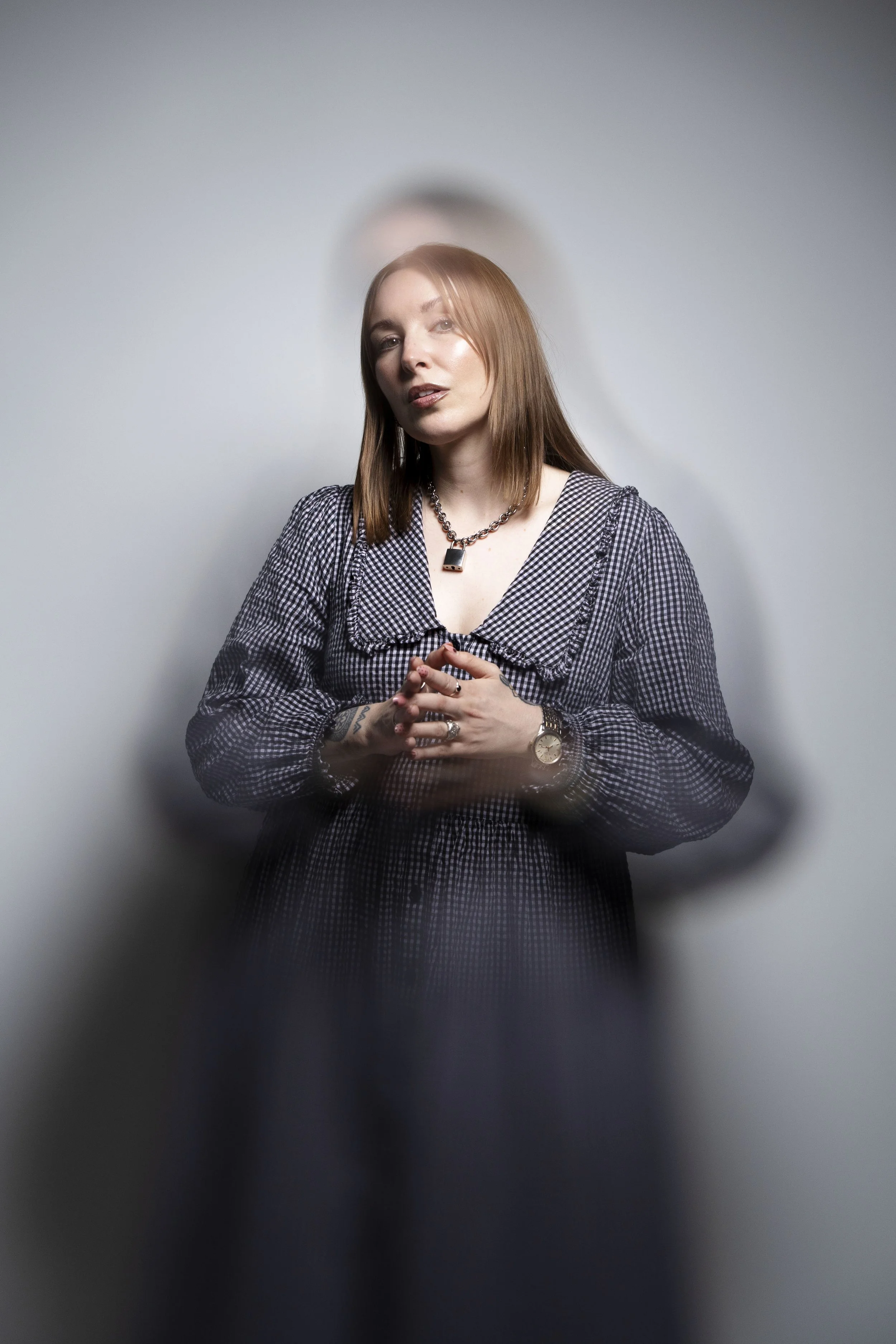
Kitty Cowell, UNMUTED, 2026 © Alia Thomas | www.aliathomas.com | Please do not use without permission or share without credit.
The concept of that is all like a big parcel. But I'm trying to really put on people, that it’s the styling and the brand identity, your visual identity, having a continuity to it that is really important. Let's think of it on a deeper level, what's the meshing behind the album, the imaging on the album cover? How do we then take a bit of that and put it into your visual identity on tour? The colours work with the album covers, and then that feeds into the lighting that you're going to have on tour, and then the outfits on tour, well, maybe we pull a little bit of that album artwork into customisation of the outfits on tour. So it all feeds into it. It might be the same clothes or versions of the same clothes that are in the press shoot, but they now have a slightly new element to them, which is another level of the marketing, which will feed into the merchandise, which is feeding back into the whole ethos of the band financially, but also visual identity wise, it's all one package, which then leads into the social media, which should be again, part of the original conversation, which is now why I do that stuff too.
It's frustrating to me, because what tends to happen is a band make an album, the manager or PR go, "okay, we need to photoshoot to promote that album. Okay, let's book a stylist and a photographer” we have a conversation, and we do this photoshoot, but no-one thinks about having a behind the scenes, social media person filming that. No one thinks about cutting that up for socials. Let's say we've done a music video as well. So we've done these things, we've got the music video, we've got the press images, and they go, “okay, we'll just put that on socials.” There should have been somebody filming just for socials behind the scenes on the shoot and the music video, so then you have content that tells a story and you can do quick vox-pops with the band. “Why did you choose to do this? Why are you wearing those clothes?” And then you have a vox pop with me. “We decided that because the album's blue, we wanted a blue theme, and we're pulling in identity from this. We really love streetwear, so we've gone down this route, we’re all wearing these sneakers…” or whatever it is. The fans love it and now they want to go buy those sneakers. I love hearing the stories behind it and the behind the scenes of things. I do it on set. I get behind the scenes stuff. Obviously, if there's someone extra there to help, it's going to be even better, so that's a big thing I push for now. That is the marketing now.
PR and marketing is so important, but if you're missing out the styling, which feeds into the social media and forgetting to hire somebody to make that social media content and making a campaign that just has that in, it's just like an extra part of it. I did a video that said traditional PR and marketing is dead, but I'm actually saying traditional in the sense of, you need to move with the times. Traditional marketing and PR needs to be there. And the people that do say that are wrong. You need all of it, and if you’re missing one, you're doing it wrong, basically. So that's what I'm trying to feed back to people.
I have always made content for myself, and for other people. I guess I didn't talk about that, but I used to work in fashion PR before. When I started the blog, I then got offered a job in fashion PR off the back of me doing a lot of styling work, and in that role, I started managing the socials for Saucony, the sneaker brand, and I grew their socials from a couple of thousands, to much bigger in a short space of time. But then I left and that got me into social media management and content creation. So I've always done content creation, and for me, I'm just putting a camera somewhere and letting people know we're making some BTS content, but that should be part of the whole thing. So it is marketing, and that's what people need to understand. It's one extra person on set. Sometimes I'm doing both. So I'm styling, and I've got a camera so I can film it, but I'm making sure to get a couple of vox-pops, and getting those extra little bits, right. Then I'm editing it afterwards. If it's a small set, that's fine. If it's not on me, I'd hire an assistant to film under my guidance while I'm styling and tell them what to capture, and then I'm editing it afterwards. Then the artist gets the music video, and the music video editor usually cuts that up.
But sometimes it happens, where I’m asked to cut that into socials, if I'm doing content jobs, and I’m doing the styling. In that role, I'm usually called a creative director, or if I'm just doing the social stuff, a social producer. But really that’s a creative director role, because I'm, doing the styling, and I'm overseeing the visuals with the director. That's what people really need - they need a creative director. They need someone that can help with the styling, and the socials and see it all as a package. Make sure that the visual identity goes across the music video, because if you have a stylist/creative director, doing the music video and the socials is all going to make sense.
I’m really glad you mentioned behind the scenes for the social media, because even artists who don't have a budget can get their mate to come and take behind the scenes for them. People are interested in what they don't get to see every day. I think that's so important.
One hundred percent. That's world building, which every internet guru talks about, and everybody in the music industry talks about it, and it's crucial. The best artists are world building, they're telling stories. Bring Me The Horizon, everything about them, but it’s kind of a different kettle of fish, because Ollie’s always had a fashion brand and been a musician. So that's world building in itself. The point is, you do get to see the snippets of behind the scenes stuff with them, and their own kind of cyber world or whatever. It brings it so much more to life. You get the documentaries, behind the scenes stuff, like how they're doing things in the studio. So much of that is lost now, for some reason. It’s all on budgets, and it's really driving me around the bend when you get record labels, or management companies, when, say an artist is playing a festival, they'll usually have their own photographer that they'll take with them, and sometimes a record label hires people for their socials. I don't mean that it’s for their socials, but they're just sending another photographer to take the same pictures, or another videographer to make the same video. Why are you wasting your marketing budget at your record label, at your management company… What use is hiring another photographer or videographer, over someone who is specifically a social content creator? You should be there sending a videographer/social media videographer to go and get the behind the scenes of the band backstage, getting on stage. Just film a little bit, and that's an extra piece of content that the band wasn't putting out that will draw the fans to the record label, and that can be use that as an ad. You know, “buy the album now.”
I want photographers and videographers to get jobs, but the right jobs. If you're not creating good content, you’re just putting it up because you feel like you have to and it's fucking boring.
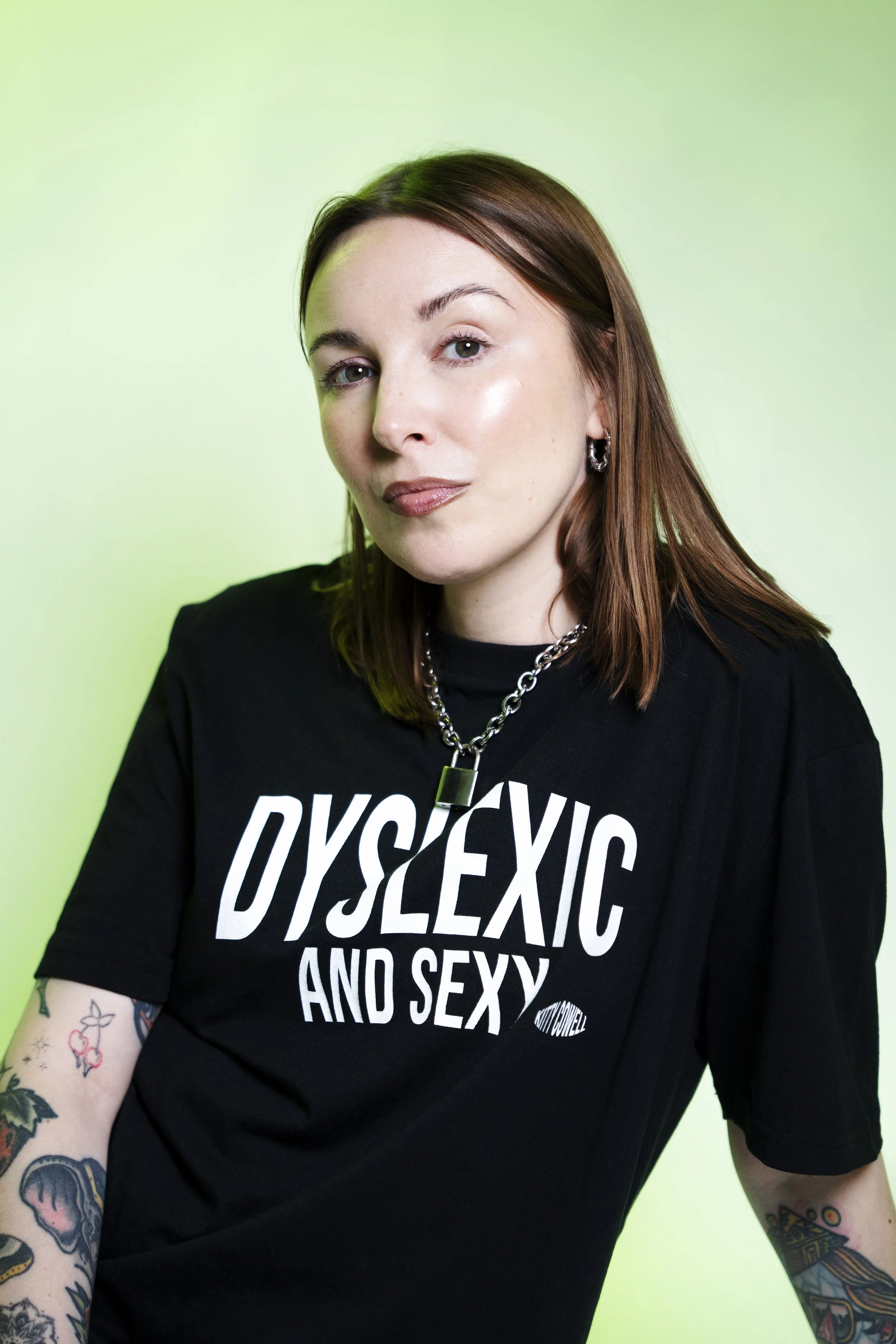
Kitty Cowell, UNMUTED, 2026 © Alia Thomas | www.aliathomas.com | Please do not use without permission or share without credit.
So as a content creator yourself, how would you describe what a content creator is?
The original terminology for content creator was somebody who creates content professionally as their job. So that can mean photographer, videographer, and also sometimes someone who’s overseeing the website content, whether that's making sure that the visuals that a photographer has shot is edited for the website correctly, that kind of thing. Then it became that website and social media were the content creation things, and now because social media is so big, it's pretty much just a social media role, so record labels will hire a content creator full time. Sony, for example, have a content creator that works for them, and they'll go out and do jobs with the artists, all for the Sony socials, for example. That’s pretty much where that title comes from, and the original wording for people on the internet was influencer or blogger. The original influencers were the bloggers. So they were the people that had their own websites or on blog platforms, or on YouTube. So you have blogger and vlogger, and then that became influencers. It got to a point where everyone was being called an influencer, and really, that title is for huge social media creators. Everyone can influence but the terminology was really for people with millions of followers, but they were using it for anyone that posted on the internet and created content. You’ve then got micro influencers, which is still a thing, and then people start to use content creation as their title. People who are content creators on social media, the real ones, are people that really shoot content, and what I mean by that is they don't just post content that just does well.
There are some people that are really great at making content for their audience, but they have a specific niche, or they just say they take pictures, and people love those pictures on their iPhone or whatever. Maybe they do some like beauty content, but I don't mean like high level, right? It's all lifestyle content creation. The real content creators are people that are a little bit more in depth with their content creation. They're using multiple cameras, they're videographers and photographers. They're using Adobe Suite, they have been taught skills in content creation, and that's a real content creator. There are some people that are just doing that for themselves online, but there's a slight difference between just an influencer, who is great as well, and I'm not knocking being an influencer, because if you've got tons of followers, you're selling lots of products, you're making lots of money, your content is nice. But they're not doing it to the high level of understanding the skills and the knowledge behind video editing and editing suites, and lenses and cameras and that kind of stuff that you learn as somebody who could be hired by another company to be a content creator for them, right? So in my opinion, that's the difference. Now you do also get UGC as well, which is another string to the bow, and that is specifically iPhone content creators. UGC means User Generated Content, and that is where brands pay you to make content that feels authentic, because it’s shot on your phone, you're in the content usually, and it's like low level content. Those people obviously can edit, every influencer can edit, but they're not having to use expensive cameras with big lenses and all of that kind of thing. They're content creators in their own right, but they're UGC creators. I do all of it, but I also know my lane. I have friends that are content creators, and that would be the name of their role, but they're really videographers with much more expensive kits than me. I have an expensive amount of kit, but my cameras max at like a grand and their cameras are like three grand, you know what I mean? So on that level, I'm on the lower end of the level of content creator. However, I am proficient in the Adobe suite, and CapCut and Canva and all of those things. I can teach other people that stuff. I can shoot on cameras, I have multiple lenses, I have lights, I have a studio backdrop system, you know, all of these things. I am a content creator, but not to the level of like my friends who go and also could shoot a documentary. I'm not I could, but like, I'm not at that level with that. And it like level of kit. I really like my short form content, and I want to be very good at it.
Do you think the industry now values personality and online presence as much as talent?
As much as talent? I mean, yes. In some cases more, not that it always should be. I think, actually, with the rise of content creators, I think there is a push towards talent being celebrated more again, as opposed to just personality on the internet, but obviously, both of those things together are so important. I think there's a pushback with people who are really talented, that don't want to sell their personality on the internet, and that's across artists, whether we're talking about musicians, or painters, photographers… They have the point of view that their art should sell itself, and I understand what they're saying. Maybe you don't have to talk to camera or whatever, but there's ways of just showing the behind the scenes process. You don't need to be talking to the camera, and that is, again, the world building for whatever kind of world they're in, whether it's painting, or photography, for example. With the rise of TikTok, a lot of musicians were not doing that. I get it, when it started they literally messaged me and were like, “we want to promote you.” I wish I'd done it but I wasn’t interested. I was on Instagram, I had to be dragged from MySpace to Tumblr. From Tumblr to Instagram, and I just thought what was this dancing app? Are you mad? Then a few years later, I realised I really missed the boat on this one! So I understand people's perspectives, and I think as an artiste, you feel like you don’t want to reduce yourself to the internet, but that’s not how you have to see it. You can use it and be clever.
There are some people where people would look at their socials and it wouldn't be for them. I get that, right? They're a bit cheesy or whatever, but they're so fucking good at it. Their numbers are mad, and I'll look at the content they're doing and realise it’s fucking clever. But somebody else would not have thought about it and would think it’s stupid. But if you think about the way that they've integrated their niche into this thing that's trending, and they've got thousands of views now, that's using your intelligence in a different way. So I think there's a way to find a middle ground of all of that where you're not having to sell your soul. You're selling your personality or your talent in a way, and then your talent is the product that will pay your bills. So I think there's a push for both. I think there was a push more for personality for quite a long time. That's why talented people feel like, fuck this, this is beneath me, you know, which I get, but I think there's now hopefully a bit more of a balance coming through.
We've spoken about the MySpace era quite heavily, but it was a key era for you in your career. How do you feel the industry has changed over that time since since those MySpace days?
I suppose being a woman in the industry, I know it's not perfect and amazing and never will be. I still hear stuff. But I do think it has changed in a positive way. I was a solo, young, female musician, and I just didn't know anything. I'm an intelligent person that sought out information and I try to educate myself as much as possible, but if you're not in that world, you don't know it. We were kind of aware that there was so much going on behind the scenes, and obviously being a woman in a male-dominated industry is not perfect and never will be, but I do think there are a lot more women in positions of power than there were before. And that conversation has been so loud in terms of like, the Me Too movement, in terms of safety for women in the industry, but also in the respect of like, why are we not seeing more women higher up in these roles? It's embarrassing for companies to not do that now. So I think there's a lot more of that happening.
Same with non-binary people, people of colour, LGBTQ people, and the diversity. Although people can argue that it got better, it got worse, etc. It fluctuates, but in general, since then, it's a lot better. MySpace was so fun and so great, but realistically, there was still a lot of misogyny, and racism, etc. So in that respect, it's much better in the industry. I guess there's been a bit of a fluctuation as well, in terms of how artists can put themselves out there, because I will shout this from the rooftop, MySpace gave everybody a platform that has never been there since. It’s just not the same. And I love Tumblr, and I love Instagram, and I now love TikTok, and they do offer really great platforms for artists, although, again, we all love to hate them because of all the change and the issues with them, but it's not the same as MySpace, because MySpace connected you so quickly to each other, and it felt very authentic and honest.
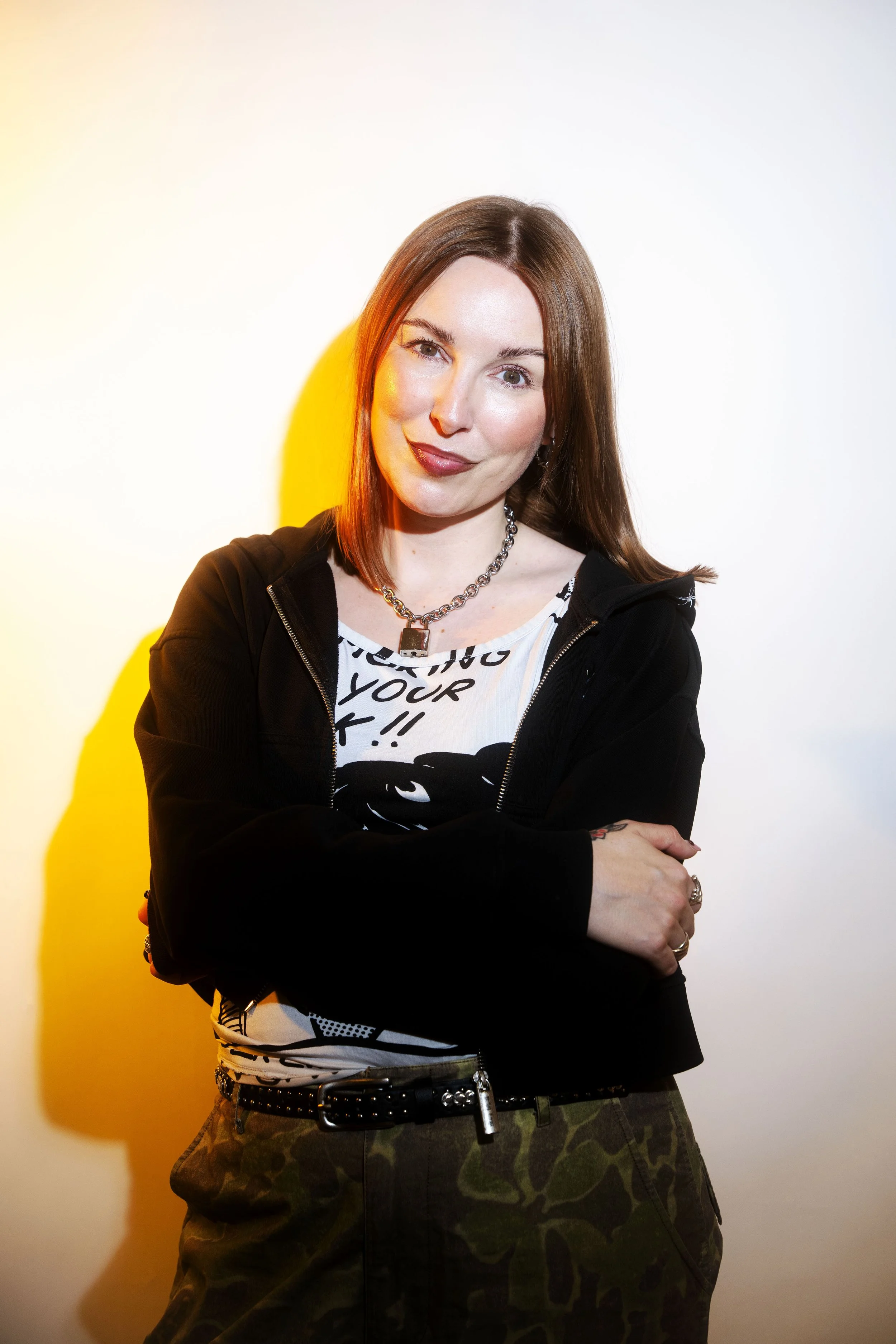
Kitty Cowell, UNMUTED, 2026 © Alia Thomas | www.aliathomas.com | Please do not use without permission or share without credit.
It was a bunch of young people, and I suppose that also matters. Although I also love the fact that age diversity within the industry now is really important. It's still something that needs to be worked on from a misogyny perspective, because so many middle aged women lose their jobs, and then it's so hard for them to find them again. And that is a very sexist thing where they get sacked from something or for some reason, lose their job, and men don't want to hire middle aged women. They’d rather hire a junior person that they can pay less, even if they're not really getting what they need out of the role. I don't know whether that’s because they can control them more, because they like how they look, whatever it is there’s a deep rooted misogyny issue that I'm sure is still happening within the music industry to some level, because it's happening across all industries from what I've heard. But the diversity in age and the respect for women, generally, in the music industry, I think there's a change that's happening. There's been this thing as I've been growing up in the fashion and music industry, where it's like you're a little bit old too old to style? Too old to post on the internet? I've literally had men, especially in the fashion industry, say to me “it's your time to pass on the baton now, don't you think, from content creation?” And I'm like, what are you talking about, bro? I've had arguments with people because it's like, why? And this was like, many years ago as well. The older I get, the more experienced I am, the more I know what I'm doing, but in the music industry, generally, there have always been women, but there are more women in power in the music industry, and they're being respected a little bit more. I think we have all of these platforms now for women in music, which is great, and I think those stories being pushed out, like you're doing, for example, it solidifies in the general public's mentality and industry's mentality, that older women who have led the way for women are to be respected within this industry. They know things that men don't know, and men should be embarrassed about sexism within their industry, sexism within their companies, etc. They should be asking women and they should be hiring women to make sure that's not happening, right. So I think there's hopefully a positive change happening. I will say I feel more of that in music than I do in fashion. That's the truth.
Although it's the one industry that women are paid more than men, in terms of models only though. Whereas the rest of the fashion industry is run by men, and although there are lots of women in it, it is run by men. I just think that they see women as dispensable in that industry, whatever role you're in, and they think they’ll get someone younger because they're cheaper, or because, I don't know, they're just a sexist pig. You know what I mean? For some reason, men like looking at younger women, and it's just that's it. And it's just gross. Whereas there are lots of intelligent, beautiful, talented women who are top of their game in any industry, and I think that there is in a positive way, a bit of a push on social media as well. I'm trying to kind of embrace that. I've been thinking a lot about it recently, I follow a lot of older women. I follow a sixty year old woman who’s like the biggest, baddest fashion influencer ever. I want to be her when I'm older, I'm still gonna be like selling your fucking clothes, bro. There's always going to be an audience.
Sixty year old women have more dispensable income than like, 30 year old women with a new baby or whatever, you know, people are so narrow minded. I do think that's changing. So from a perspective of the industry changing, I think there's hopefully a slight positive shift. Although in the world in general, it feels like everything's taking 10 steps back. There was definitely a lot more racism and sexism in the MySpace era than there is now, you know, although I know it's not perfect now. There's definitely been a lot of positive change in regards to that. But in regards to artists putting music out, I do think that TikTok gives you a platform if you know how to use it, which was the stuff that we talked about previously. I think there’s a lot of people that are scrambling and trying to figure it out, and they're not doing the authentic things that we've talked about that honestly will just help them so much more. They should be using it as a tool to tell the story they're already telling. I don't know, everyone's angry that they have to use TikTok, and some of these people are the same people that loved MySpace which I find odd. But MySpace wasn't short form. So there's positives and negatives and we just have to embrace it and kind of use the entrepreneurial MySpace spirit that we had back then in the same way that we do now. I understand why people like record labels sign people off the back of TikTok, and so it is a shit industry in that respect, but it's what happened on MySpace and you've got to be in it to win it, babes.
That’s very true. Finally, to round things off, for any women and girls who might be aspiring to get into specifically the music industry, maybe as a stylist or content creator, what advice would you like to pass on to them in how to do so and to succeed in it?
If you want to get into styling, you need to create some kind of portfolio. Like I was saying at the beginning of all of this, I made and customised some clothes, got my friends to model and I took pictures. I created my own portfolio. That was for design, but same thing, you know, because I was styling the images as well. Create your own portfolio, because if you go to university to do styling, that's what you will do. You don't need to go through university. You can do that yourself. Pull in the resources you have. I'm sure you have friends that want to be photographers, models, etc. As long as you have a body of work, you can show a stylist. That's a starting point. Then research stylists that you like and respect, and reach out to them and say, “hey, look, I have this portfolio” and any other job experience that you have. It does help, even if it doesn't feel relevant. So your CV, whatever it is, put it on there and then attach your portfolio and say, “I'm available to do X, Y and Z.” The thing is, you won't hear back always, and I'm quite honest that I don't respond to all of those emails until I need somebody, because I'm so busy, and sometimes if you just catch me on a day where I'm having an admin day, great. I'll definitely keep you in mind, and always title the email, “styling assistant/fashion styling assistant” whatever title it is what you want it to be. Then when I'm looking through my emails, it’s easier for me to search. You might have emailed me two years ago, and I replied to you now, you know. That’s just the way it is, unfortunately. And then if you want to get into content creation, kind of the same thing, like just start creating content.
When I was in PR, I was working seven days a week for a year and a half, doing all my stuff on the side, doing long PR hours, but it was all beneficial to like my future. So you have to be willing to work hard and work long hours, you know? So you do it on the side, you have to hustle. Anytime you get on the weekend, and evening, whatever, something you're doing, like you're doing lifestyle content or whatever, just film whatever you're doing, and create a niche around it. All you need is a tripod and a good phone and some good light. So if it's outside, you've got great light, but if not, get one of these little lights, and again, create a portfolio. So with that, put it out on the internet and try and grow your social media. But also, if you want to be a content creator for other people, you have to make a portfolio, and just do it on Canva. They have loads of portfolio examples, and you can create a website with that. You have a link that then you can send out to people. Just build it out, put all the videos and the pictures in there, and just use social media to learn as well, you know. Look at behind the scenes of stylists doing their job, look at behind the scenes of content creators. And you have all those amazing people that put up videos explaining how to do certain edits, and you can learn from them. Tutorials are great. So most importantly, just start building a portfolio.
One thing I will say with styling is it's not easy to be an assistant. I'm very nice as a stylist to assistants, but I was not treated so nicely when I was an assistant. You have to go and collect clothes, you have to go into London, you have to be willing to travel, you need to have your own big suitcase so you can collect stuff, you can take it back, and you have to be trustworthy and reliable, because that's very important. You're collecting stuff that is under my name, and if you lose that, you're paying for it. Because I'm gonna have to pay for it. So you have to be aware that you have that responsibility. No one ever loses stuff, but there have been times where it's nearly happened. You have to be aware that you have to be reliable, consistent, and you have to be willing to learn a lot on set and do multiple jobs. It's hard work, and the days are long, and then you have to do returns with me. I do a lot of it myself, but if I need help, someone else is helping me do it, so they have to go and take some of that responsibility. And I don't just hire those people and not pay them. This is what a lot of people do, to pay them travel because it's like your way into the industry. I'll cover your expenses, I'll make sure you're paid, you're fed, etc. But it's not always high pay. You’re going to get a fee, and you're going to get everything covered, but to begin with, it won't be a lot. Then maybe you do well, and you get the bigger jobs, you get paid better. But you just have to be aware of all that. Even content creation is fucking long. People think it’s a quick thing to do well in but it takes a long time, and it's a lot of mental capacity, then you've got to edit it. This stuff isn't, isn't easy. So you have to be willing to put in the work and you have to be willing to learn. So create a portfolio, be aware of all the things that I've said, but also go out and get it, you know. Do that bit yourself. It will give you the confidence that you can do it, and then once you've got that, you'll have more confidence to reach out to people like me.
It was a pleasure talking to Kitty and it’s obvious how passionate and knowledgable she is about the industry and the work that she does. Thank you Kitty for going into such depth on the topics discussed! If you want to see more from Kitty, you can find and follow her at the links below:
Instagram: @kittycowell / @kittycstyling / @killpopcreative
TikTok: @kittycowell
Website/Blog: https://kittycowell.com/
YouTube: @KCTELEVISION
If you have anyone that you'd like to recommend I speak to, let me know!